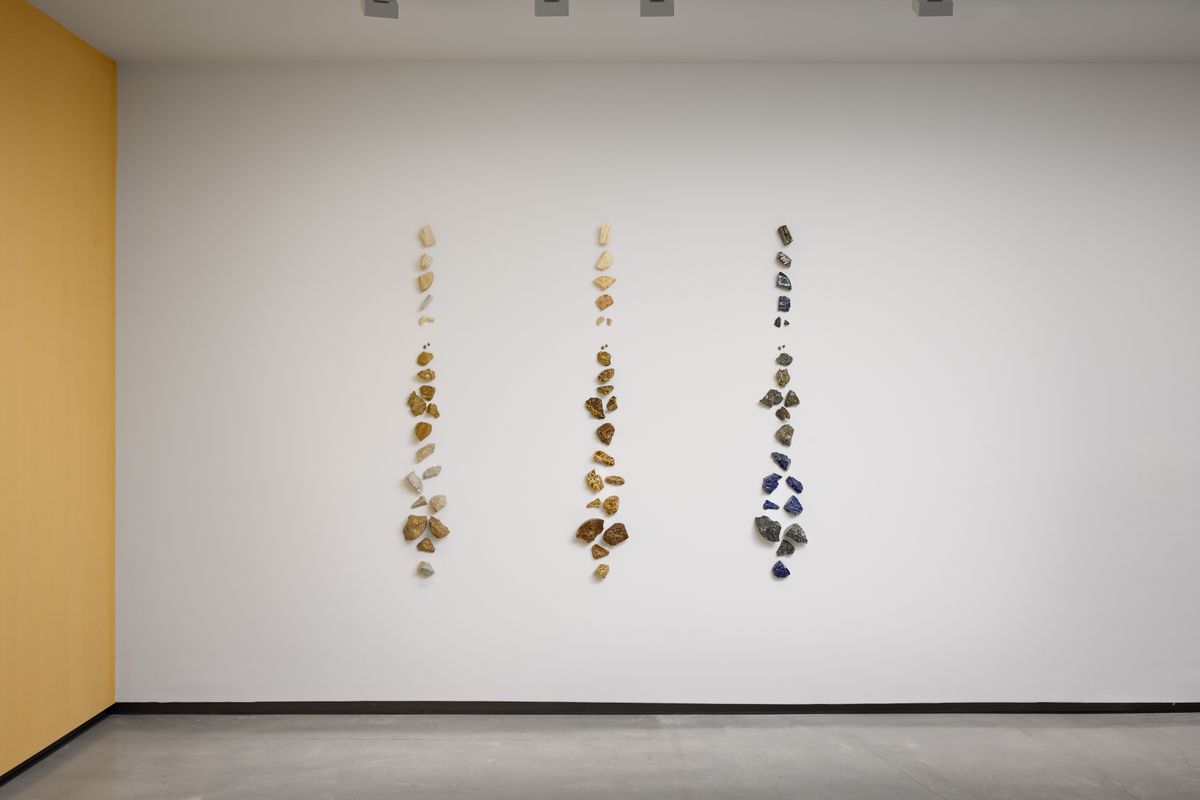
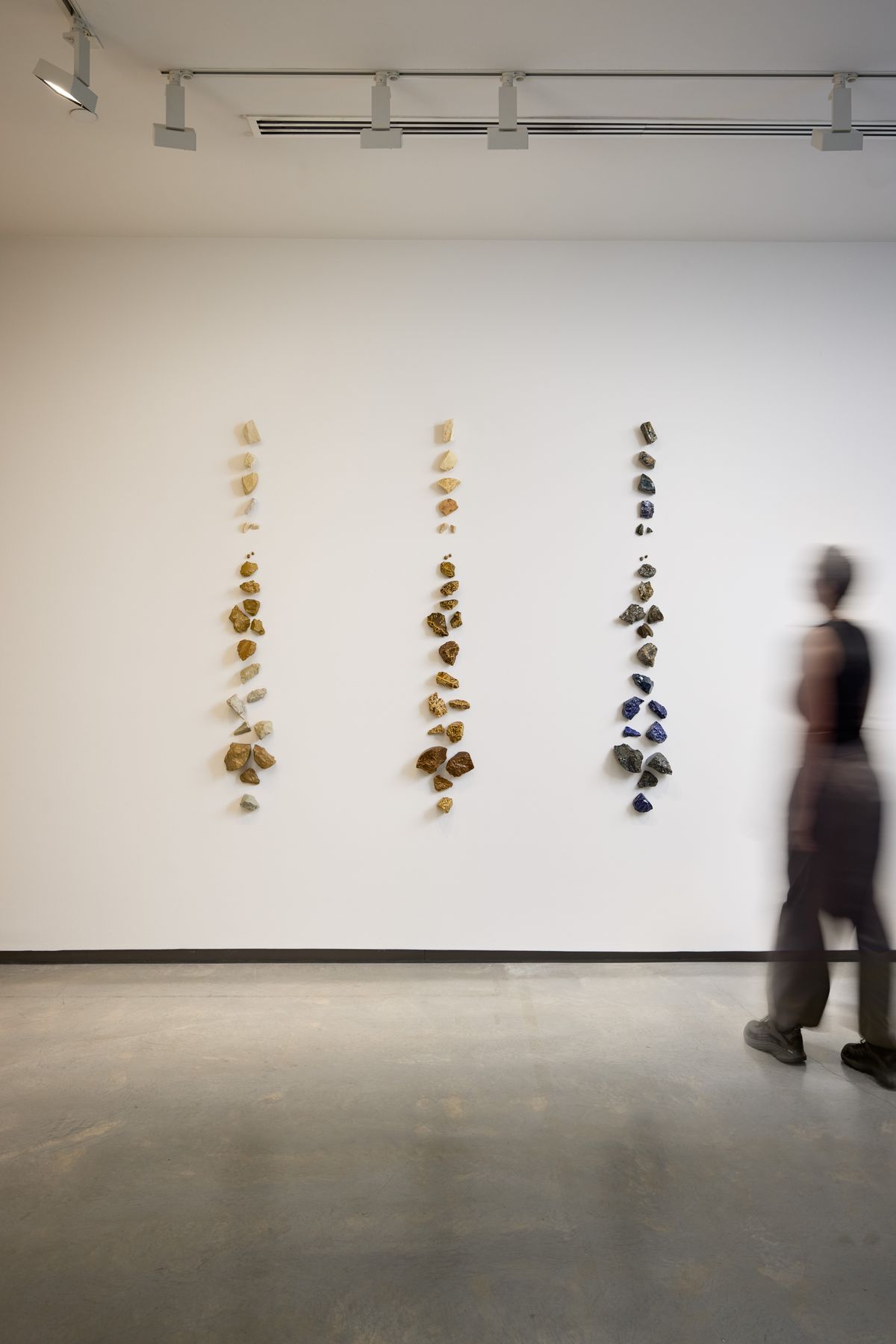
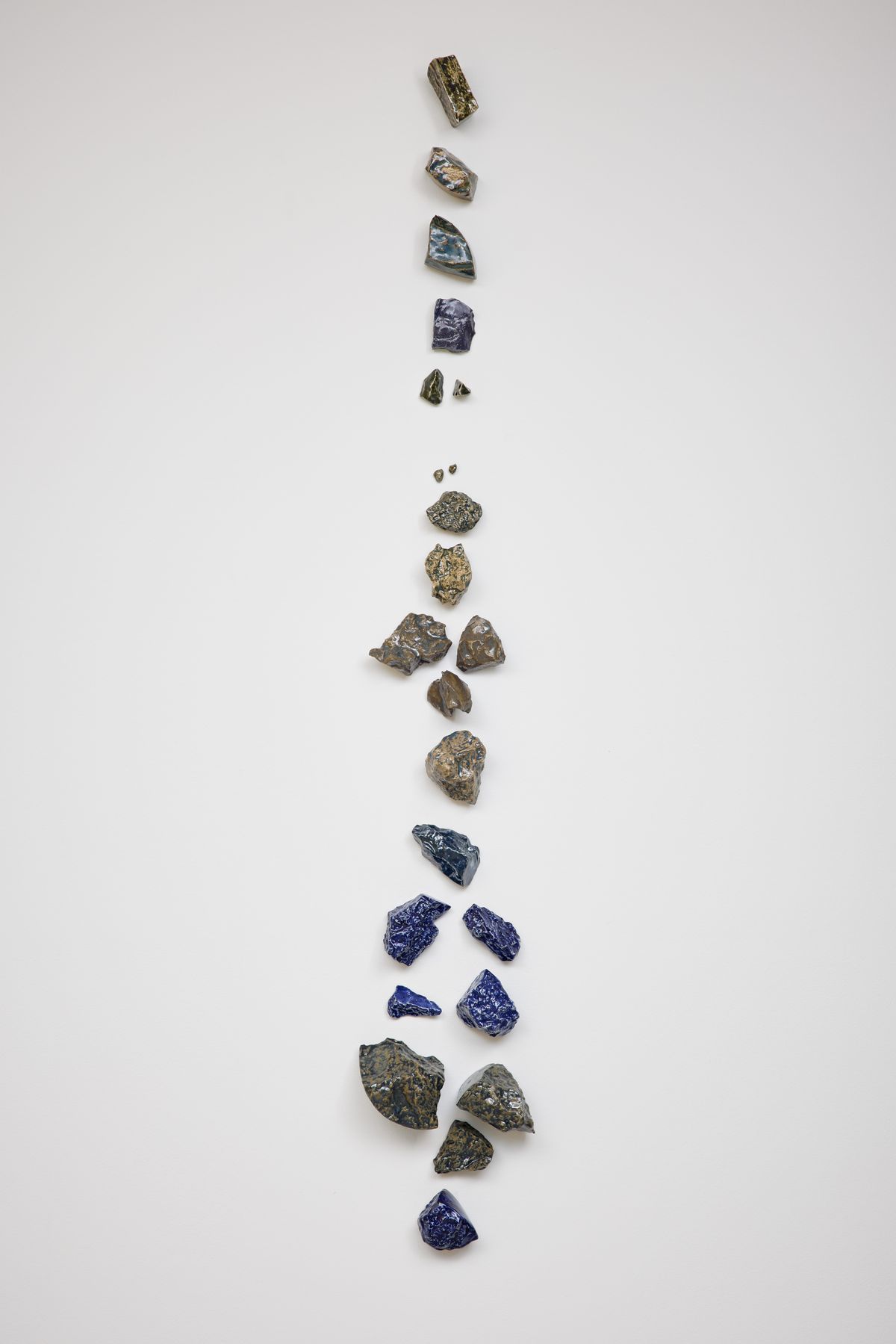
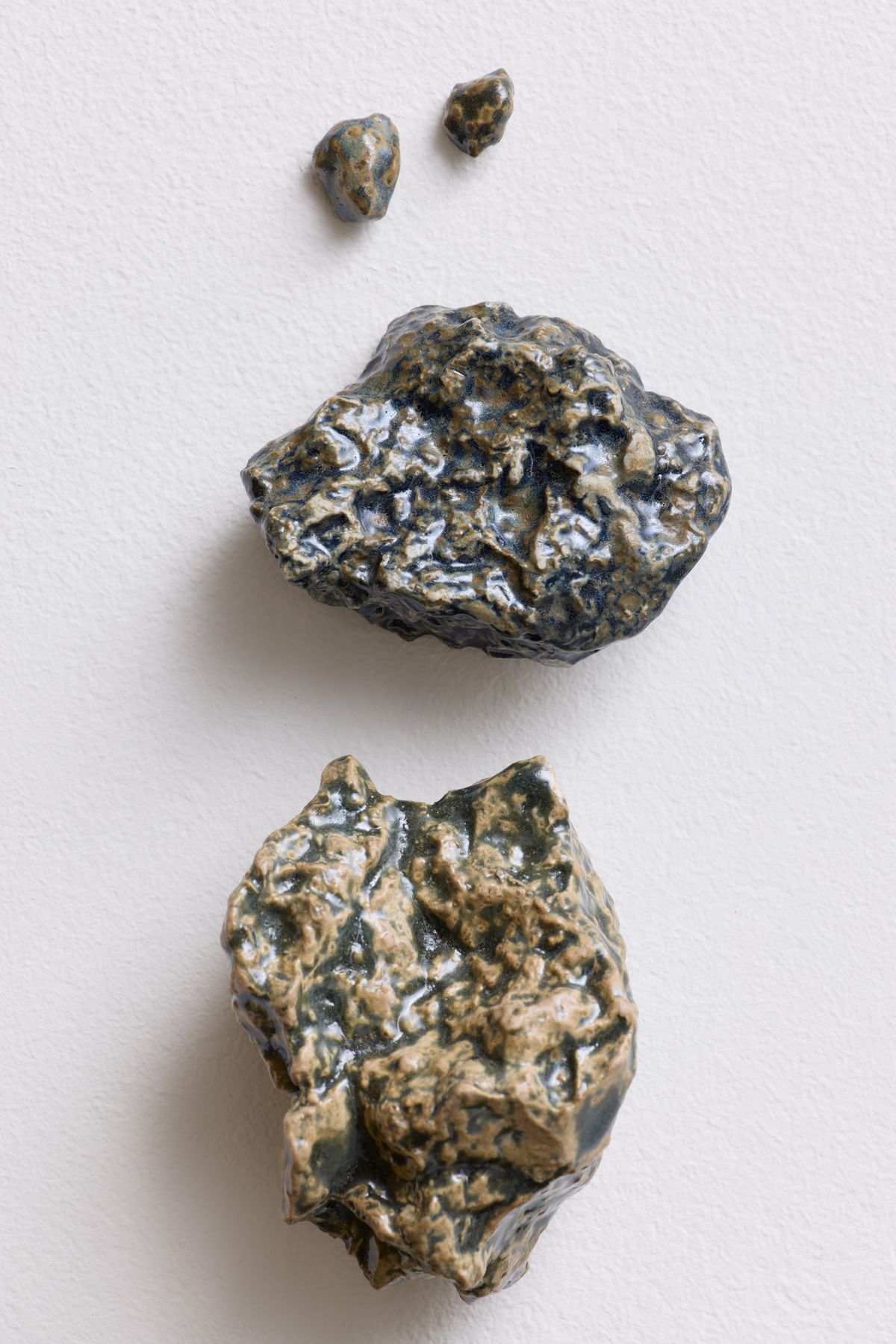
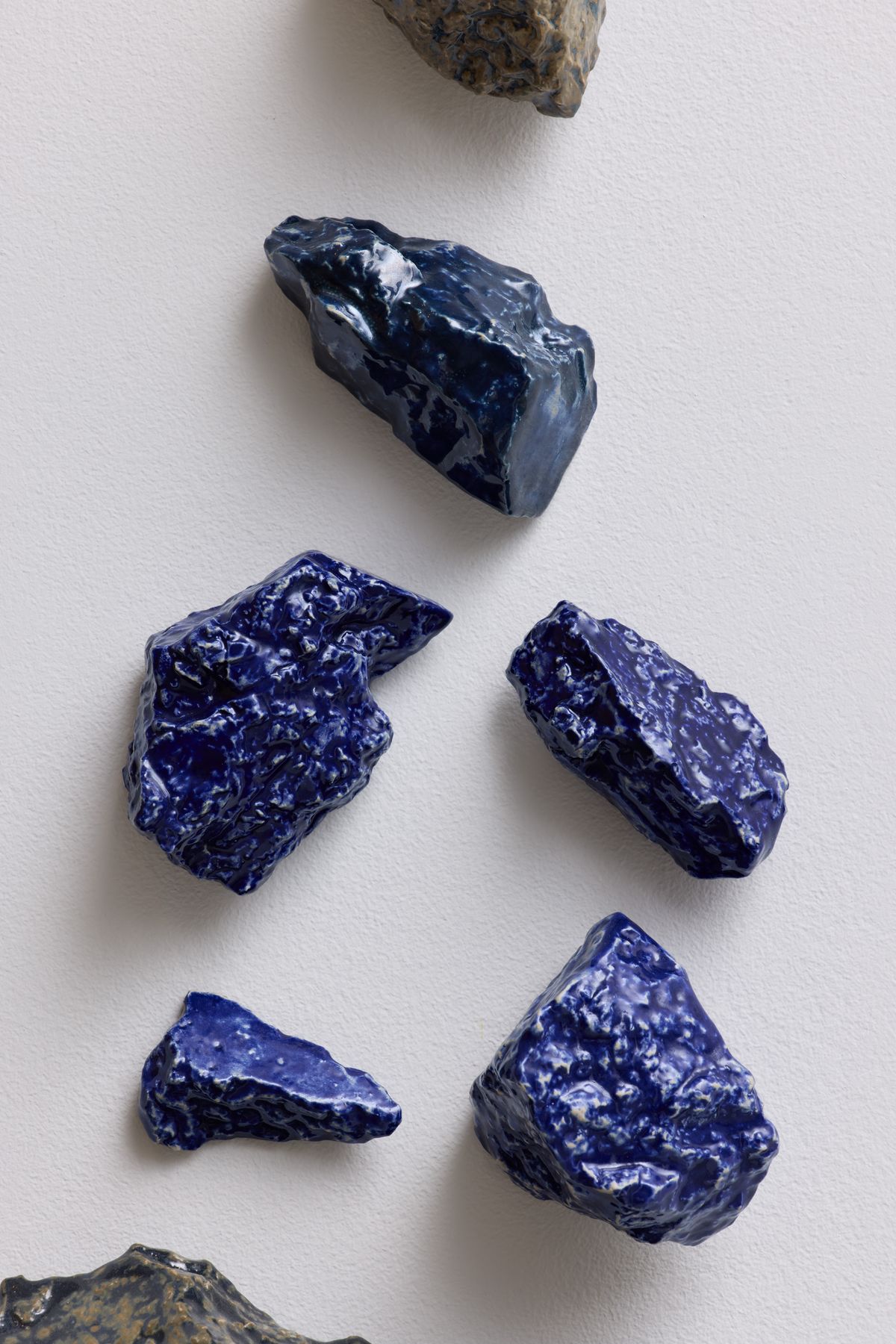
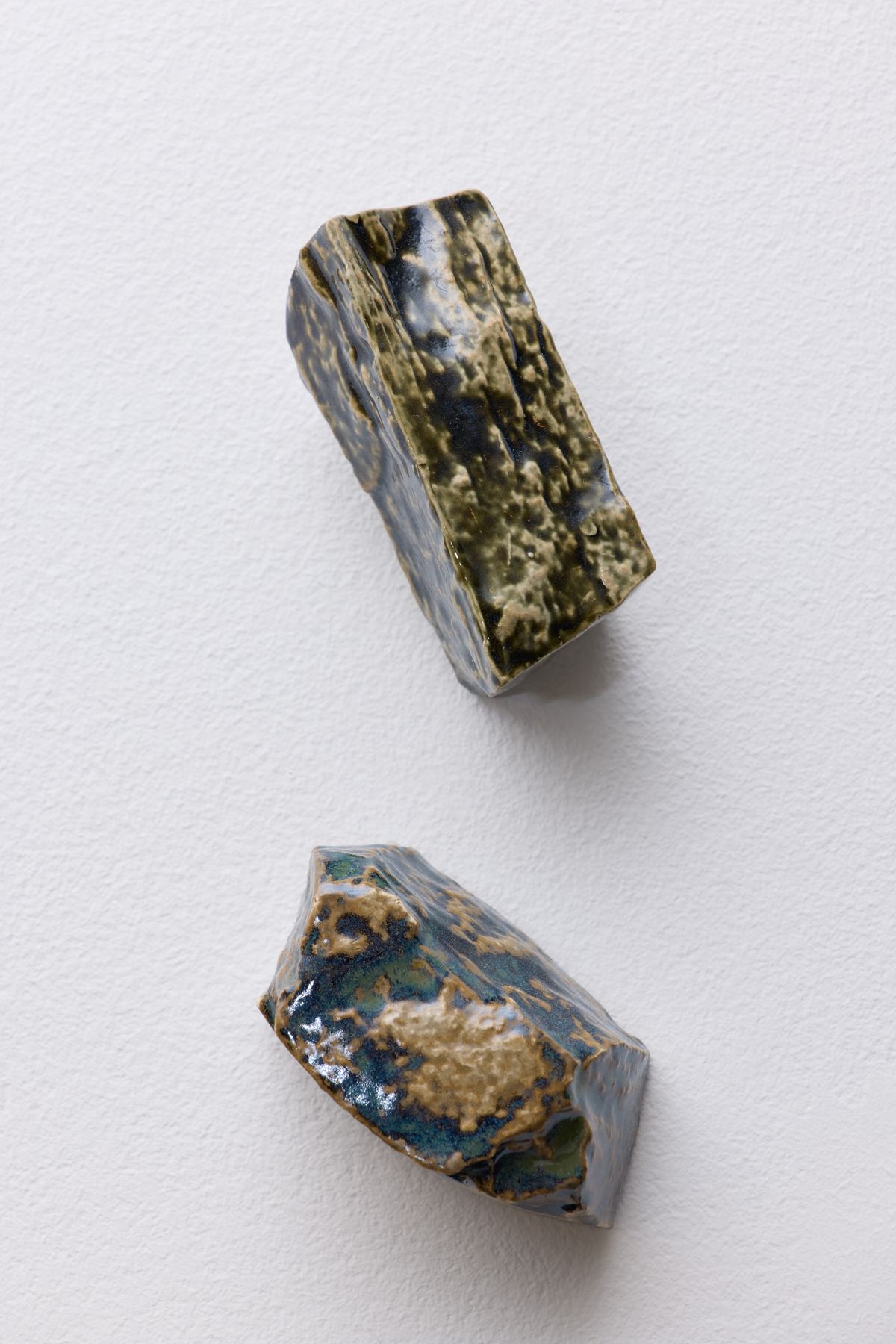
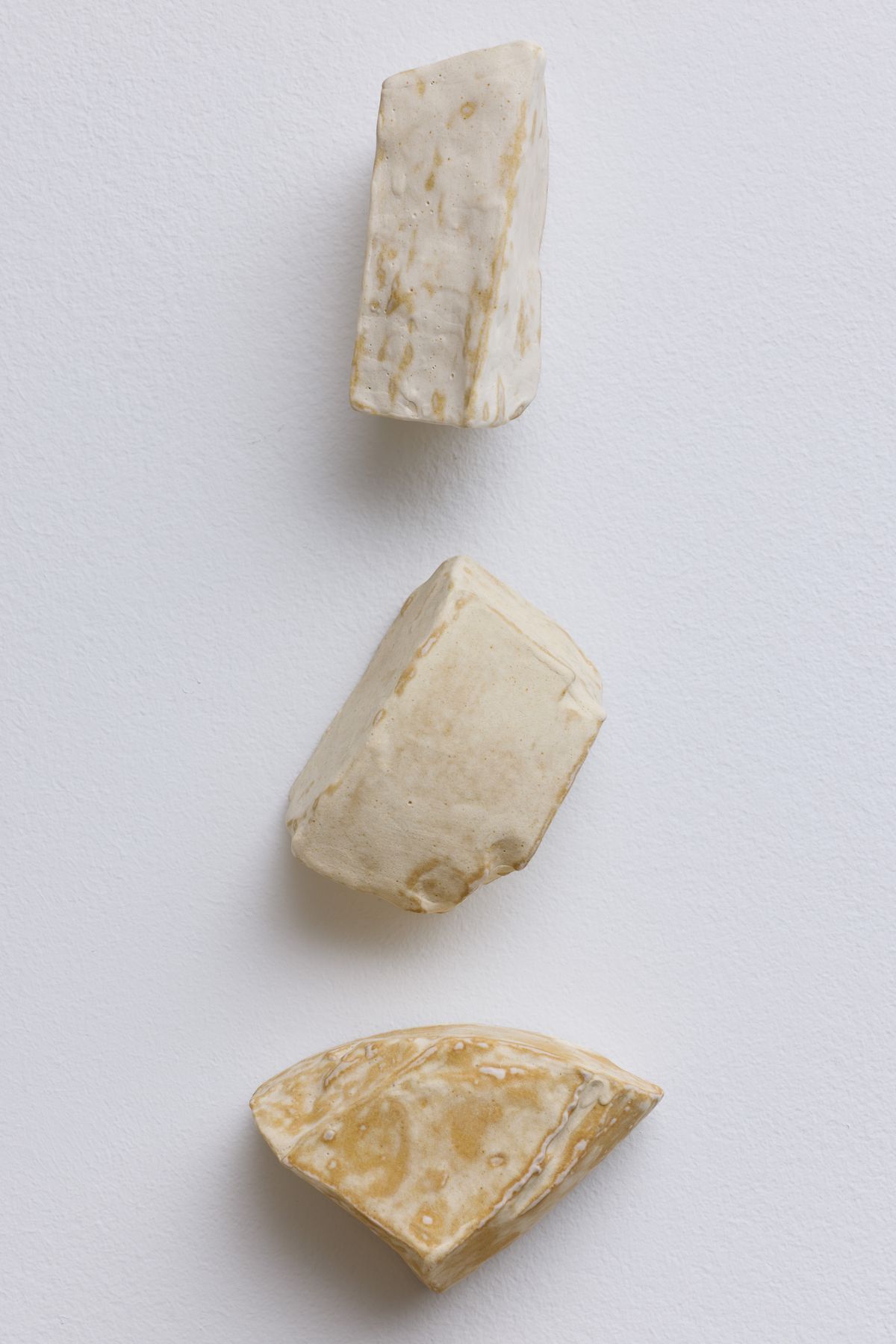
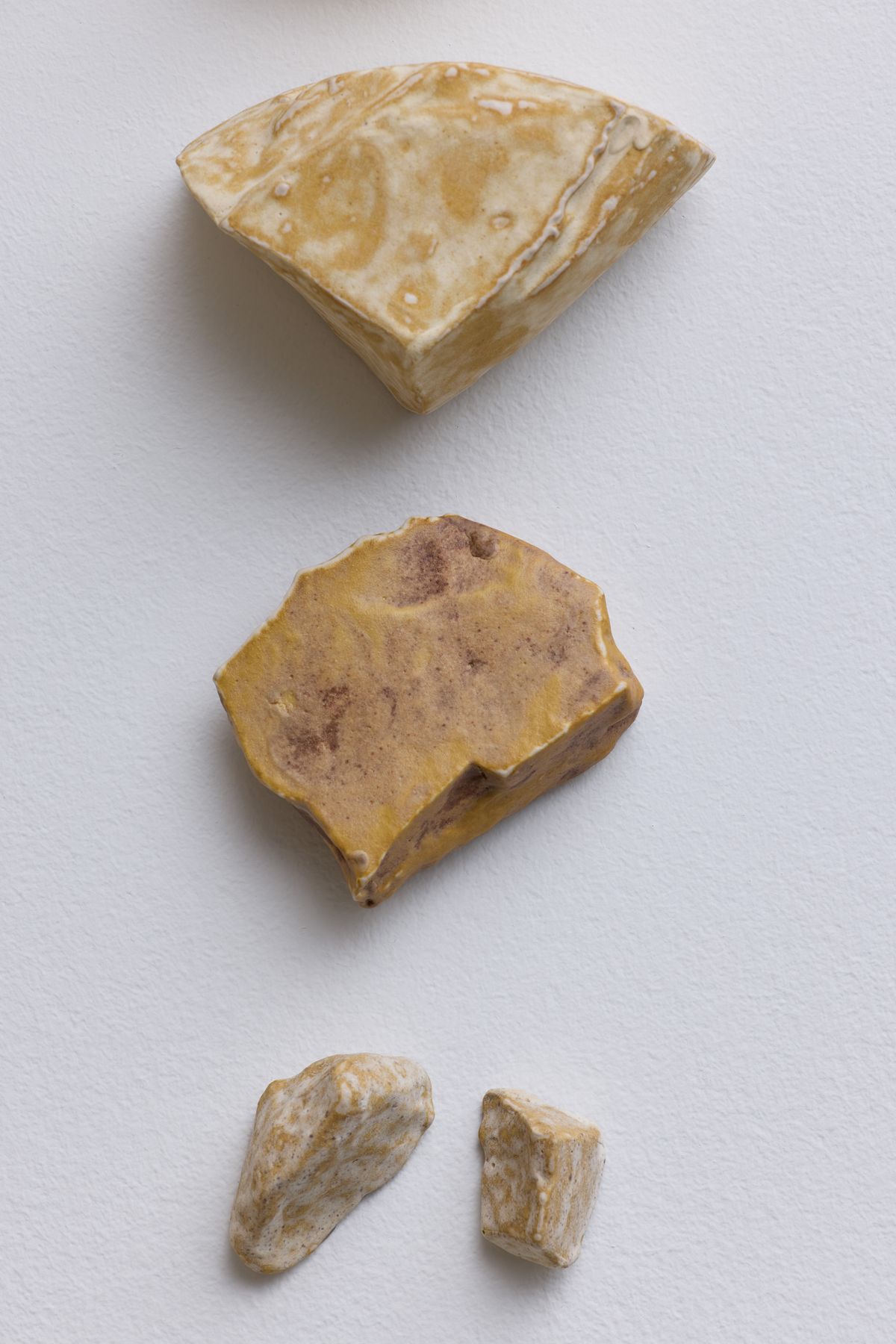
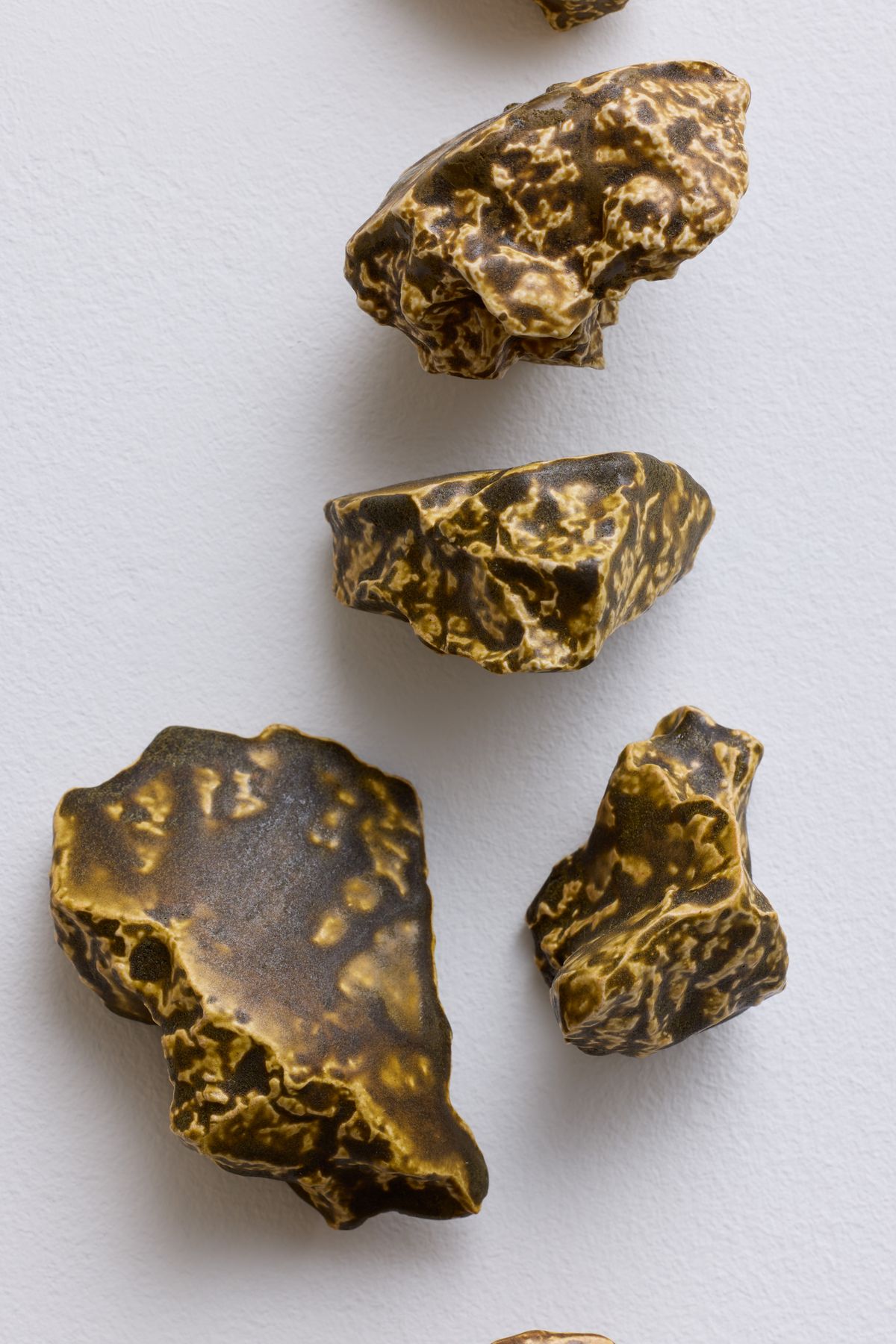
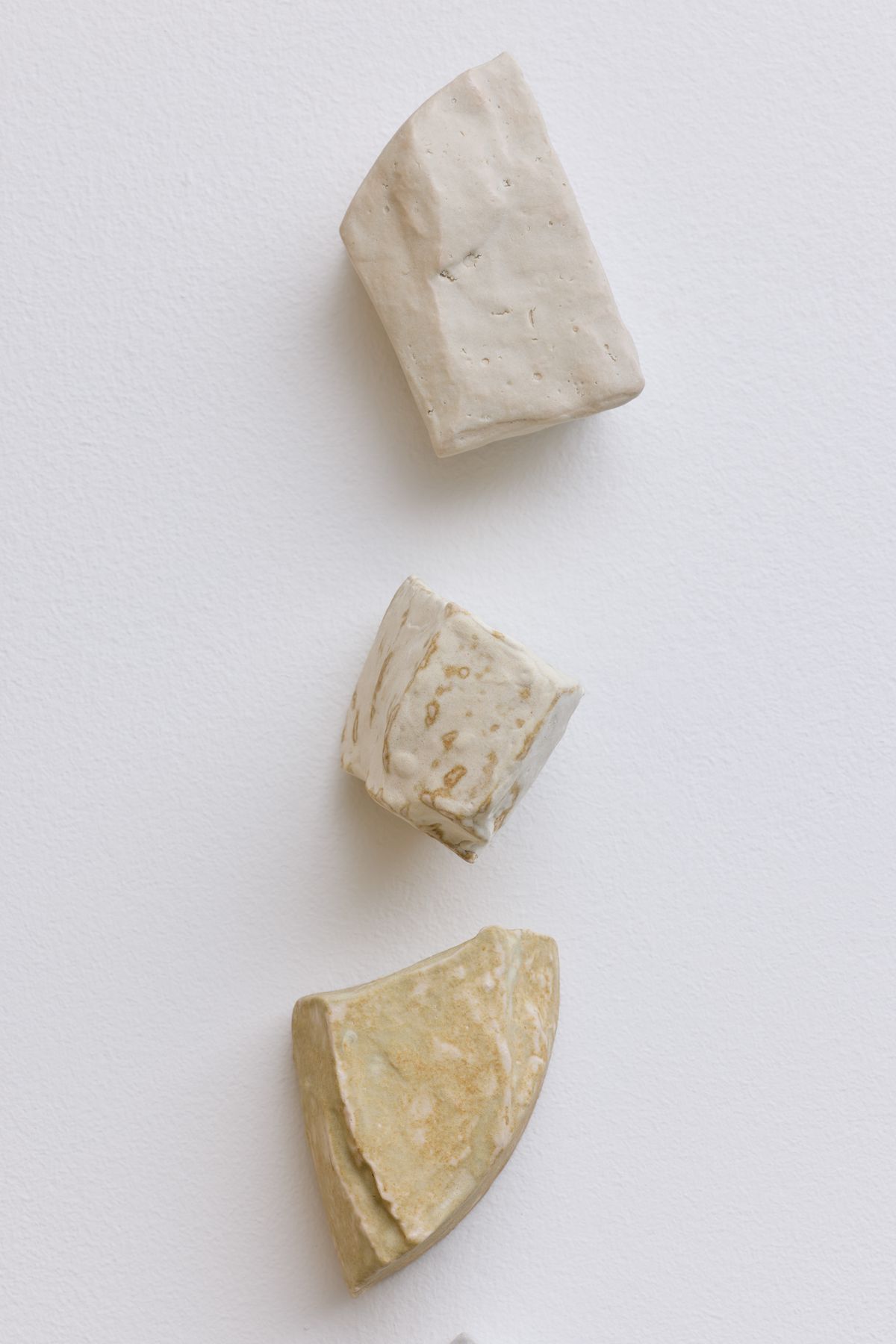
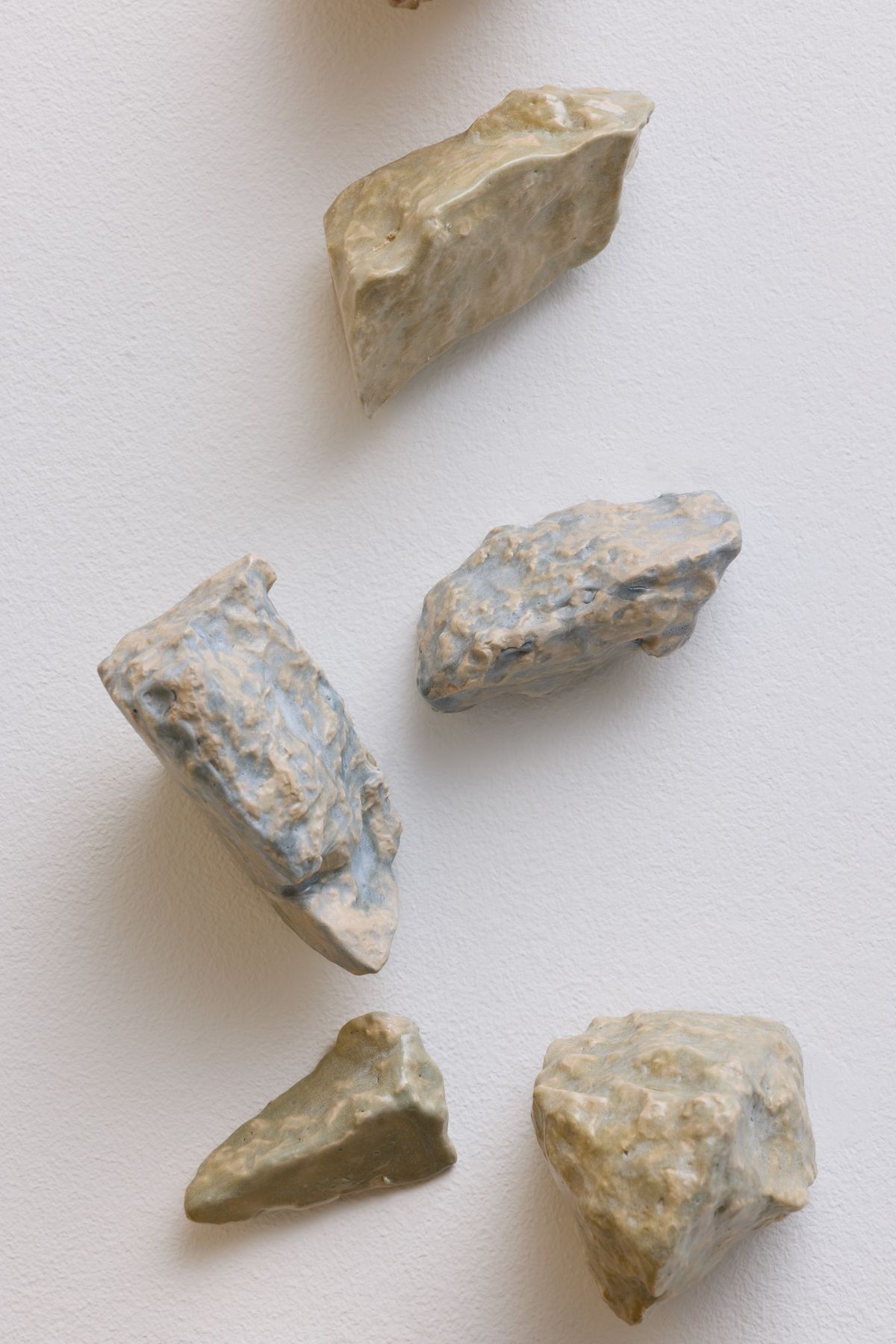
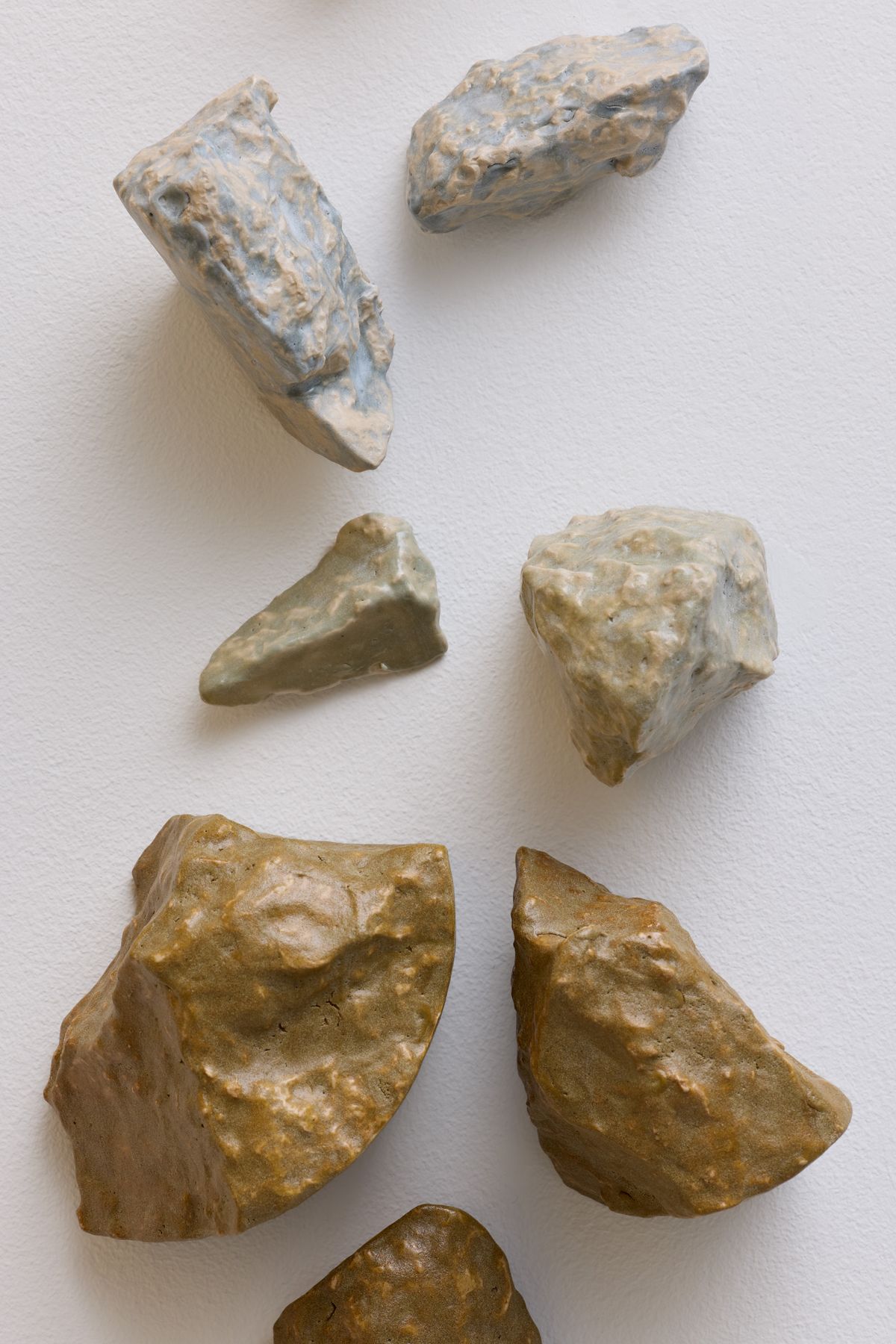
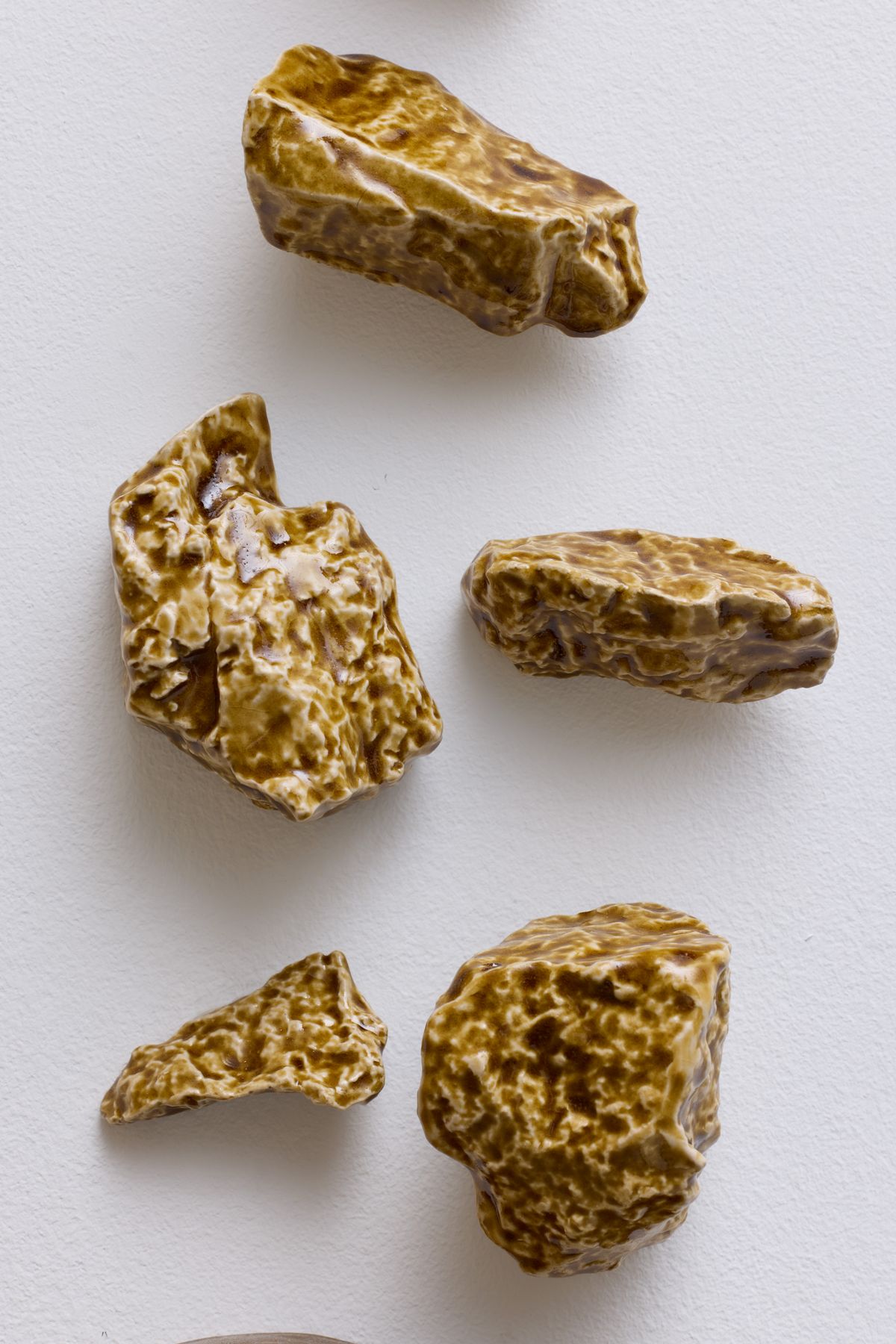
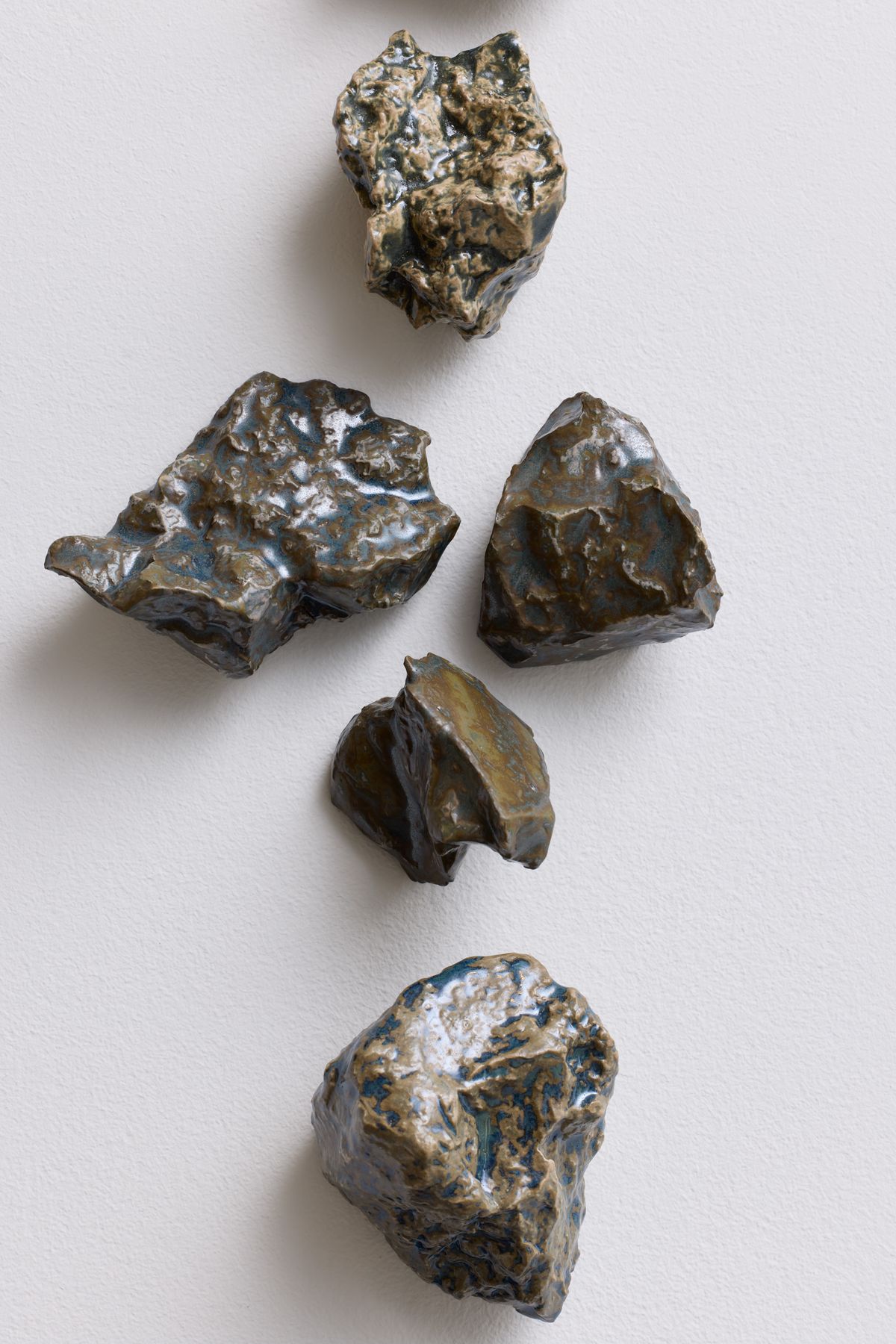
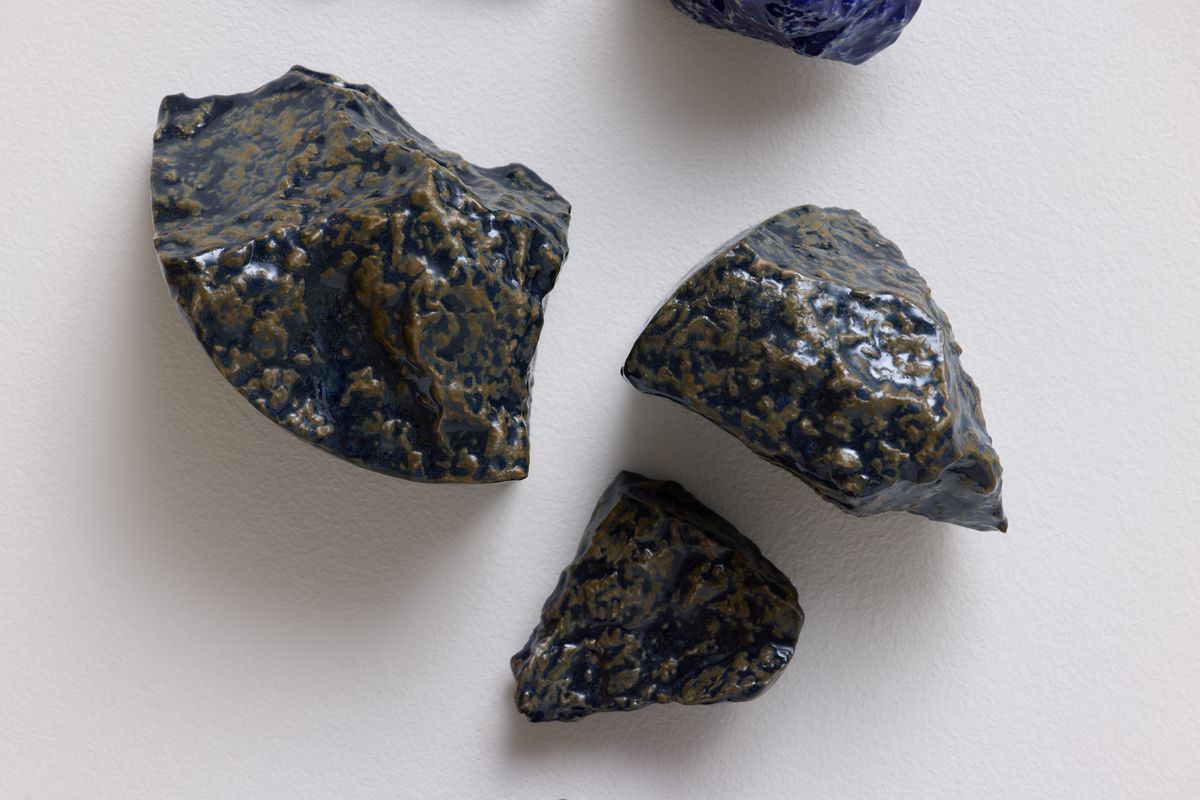



Yasmin Smith, Chicxulub, 2025, white stoneware with 45 data-derived glazes, 170 × 170 × 10 cm, TCG023746
Chicxulub presents ceramic glazes and forms derived from the ground zero of Earth’s fifth mass extinction event, the End-Cretaceous–Paleogene extinction, at the impact zone of the Chicxulub crater. Through a collaboration with Professor Kliti Grice and the Western Australian Organic & Isotope Geochemistry Centre at Curtin University, Smith obtained fifteen samples from a core drilled through the crater’s peak ring to a depth of 1.3 km below the crater floor.
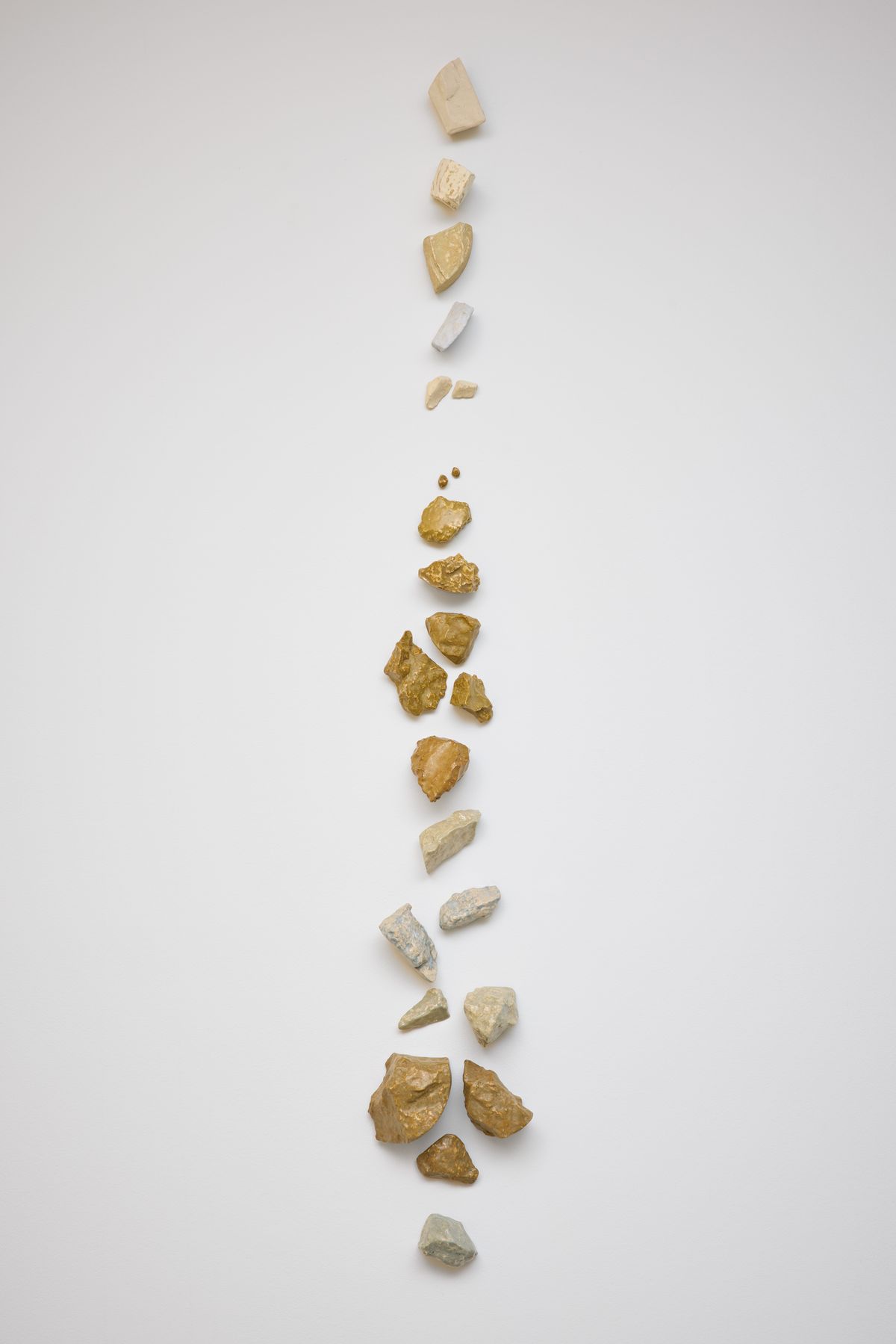
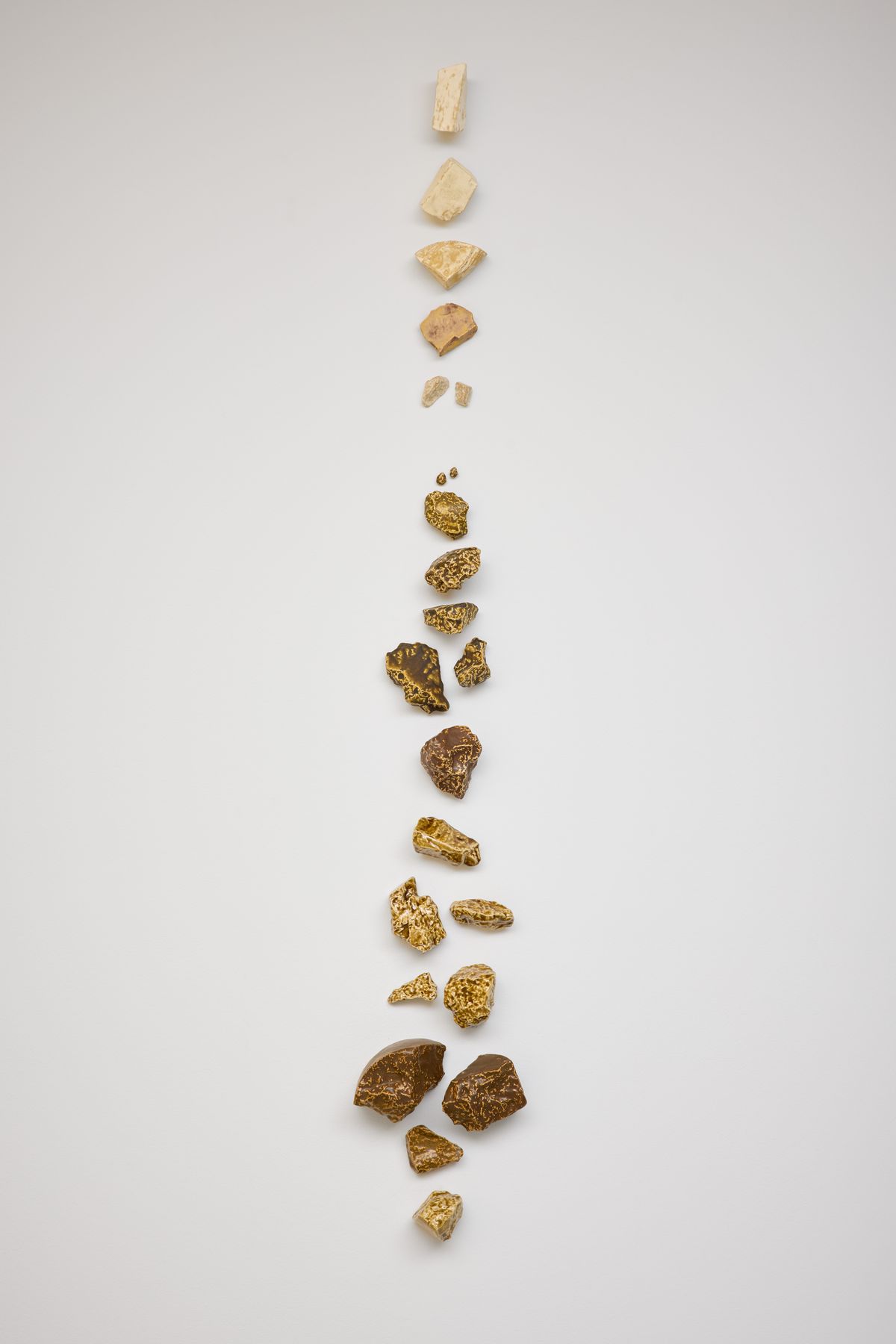
Smith cast ceramic replicas of the core samples and developed glazes from the chemical analysis of each. The work is arranged in three vertical lines: the overall chemical composition on the left, major elements in the centre and trace elements on the right.
Reading downwards, the first five samples in each line derive from post-impact sediments washed back into the crater by subsequent tsunamis, forming calcareous rock. At 620 metres below the surface, the core crosses the extinction boundary, marked in the work by a break in the vertical lines and a sudden shift in the character of the glazes.
The five samples immediately below this boundary come from target rocks chemically and physically transformed by the force of the asteroid impact. They include suevite breccia, a melt-bearing impact rock composed of shocked and unshocked fragments of rock, minerals and glass fused and cemented together. The lowest five samples represent the oldest basement rocks, at times intersected by melt-rock dikes, traces of which are visible, for example, in the glaze of sample fourteen.
Smith cast ceramic replicas of the core samples and developed glazes from the chemical analysis of each. The work is arranged in three vertical lines: the overall chemical composition on the left, major elements in the centre and trace elements on the right.
Reading downwards, the first five samples in each line derive from post-impact sediments washed back into the crater by subsequent tsunamis, forming calcareous rock. At 620 metres below the surface, the core crosses the extinction boundary, marked in the work by a break in the vertical lines and a sudden shift in the character of the glazes.
The five samples immediately below this boundary come from target rocks chemically and physically transformed by the force of the asteroid impact. They include suevite breccia, a melt-bearing impact rock composed of shocked and unshocked fragments of rock, minerals and glass fused and cemented together. The lowest five samples represent the oldest basement rocks, at times intersected by melt-rock dikes, traces of which are visible, for example, in the glaze of sample fourteen.