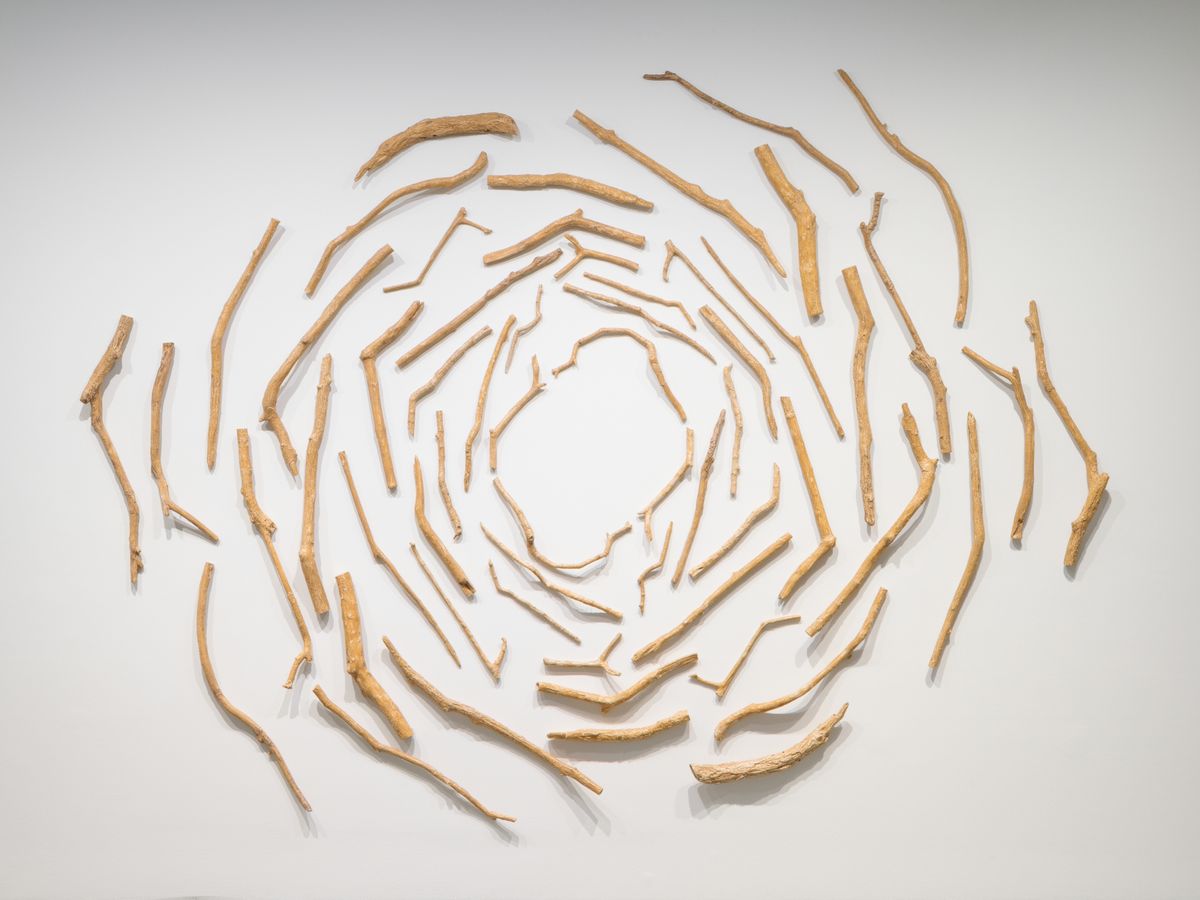
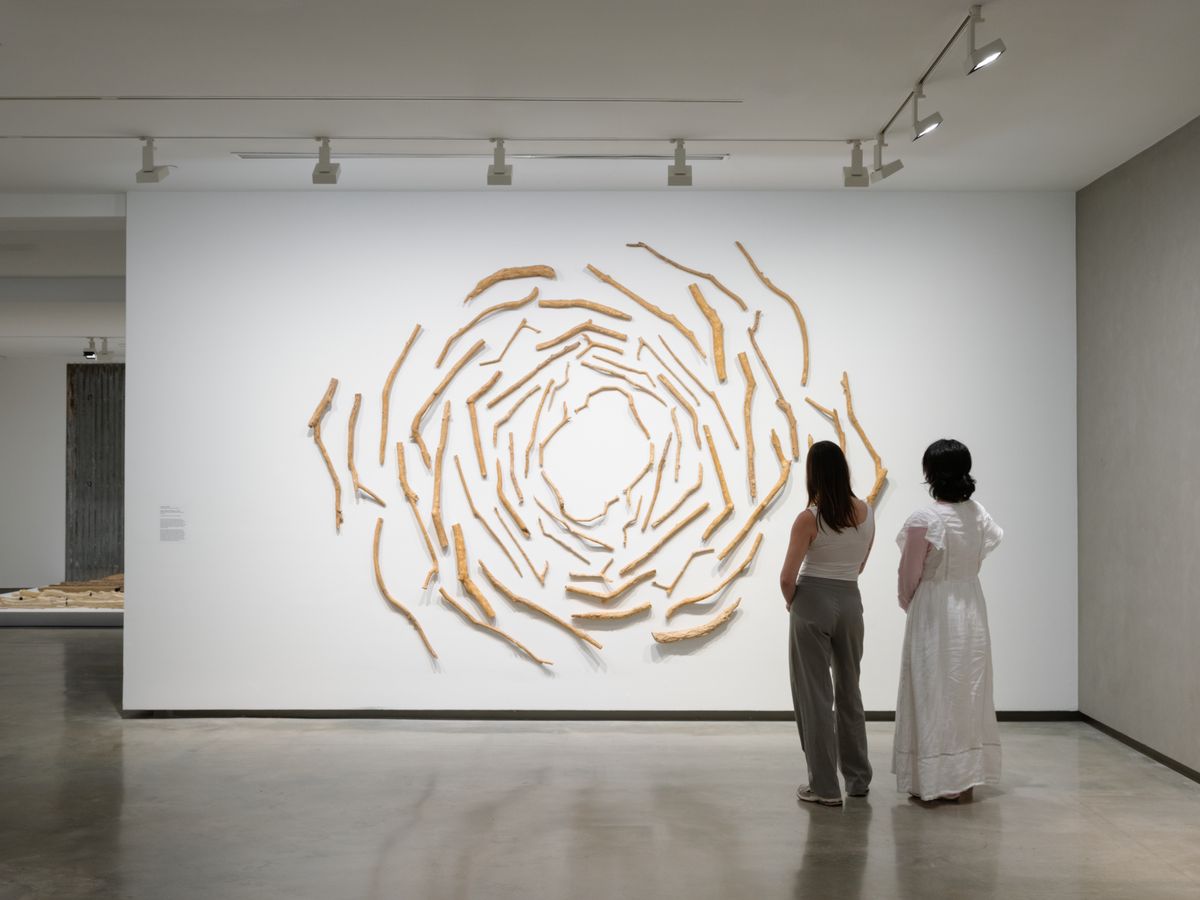
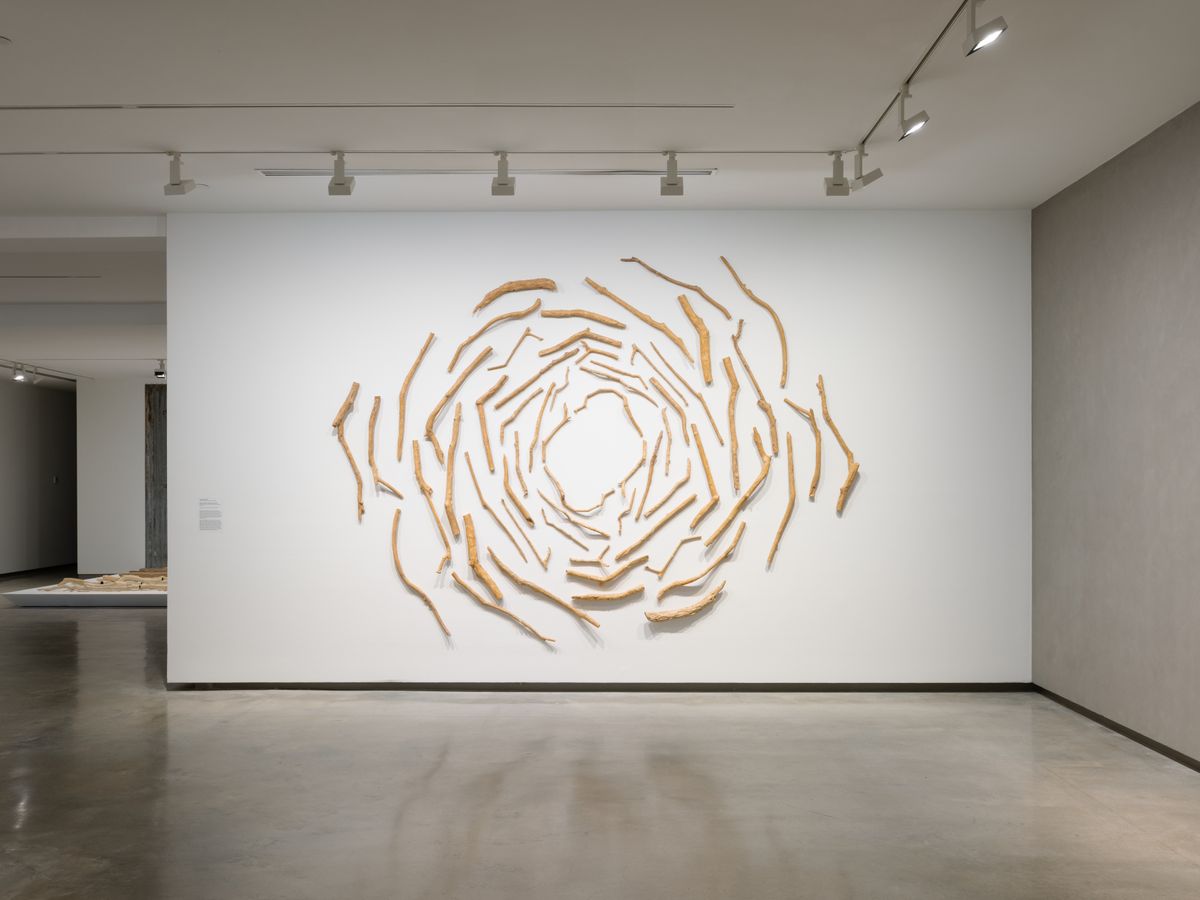
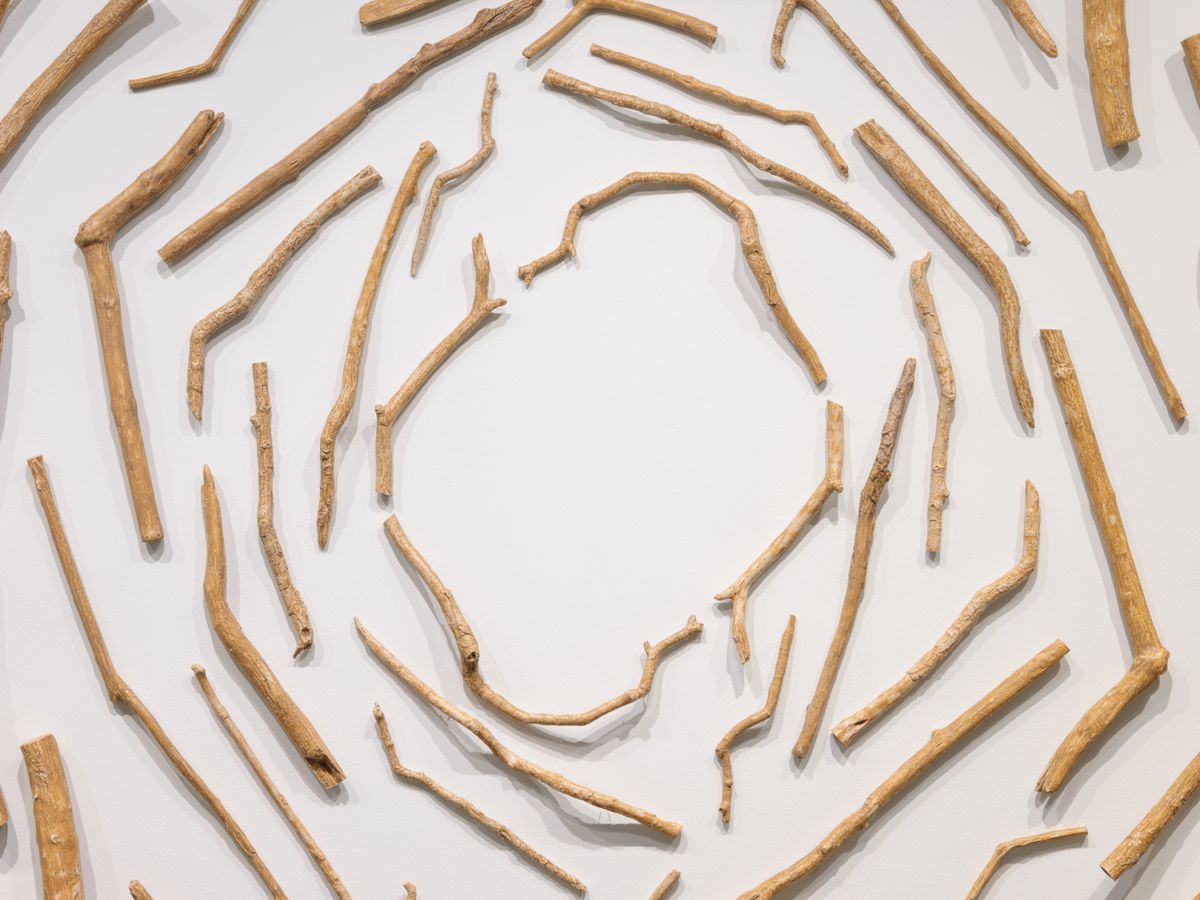
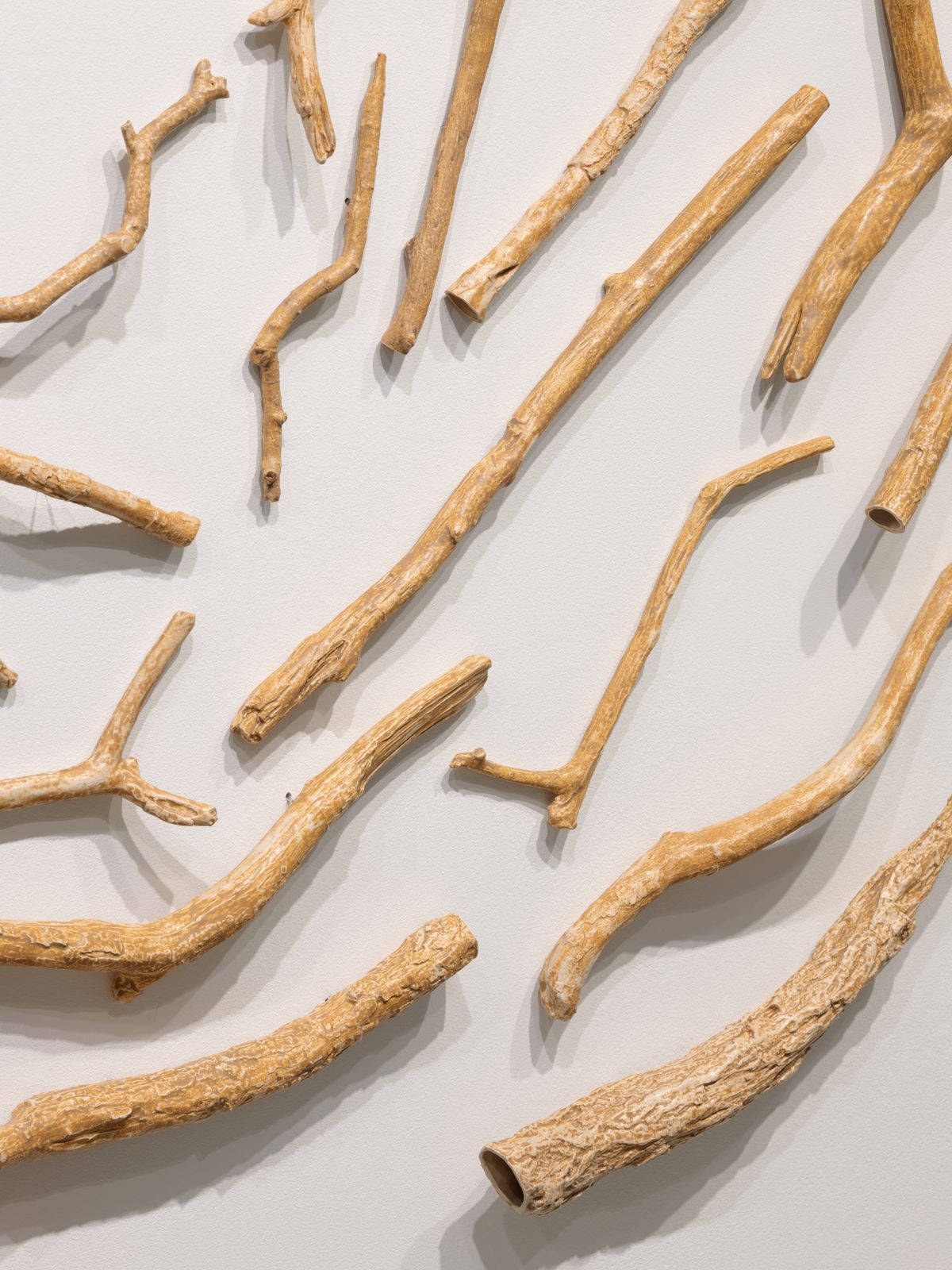



Yasmin Smith, Manchester Driftwood, 2025, white stoneware with Manchester Ship Canal driftwood ash glaze, 260 × 350 × 10 cm, TCG023747
Manchester Driftwood traces the chemical legacy of the Industrial Revolution, a ground zero for Earth’s current environmental crisis and sixth mass extinction. During the eighteenth and nineteenth centuries, Manchester’s rivers and canals, connecting to the Port of Liverpool, became dumping grounds for vast quantities of industrial waste, including coal ash, dyes and factory chemicals. Heavy metal contamination remains in sediments of the Mersey and Irwell catchments, while agricultural pesticides, industrial effluents and urban runoff continue to pollute these waterways.
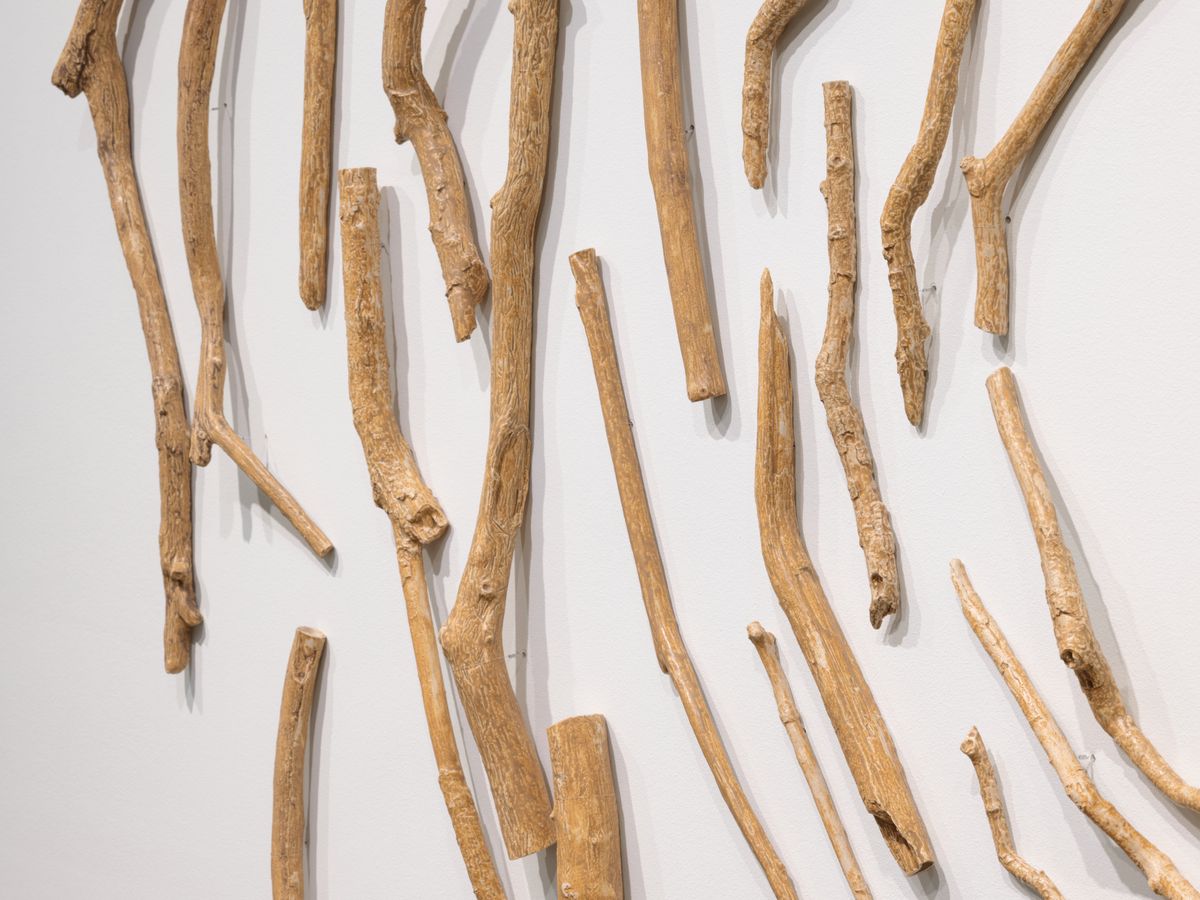
Manchester Driftwood considers the capacity of plants growing in these riparian ecologies to reveal the history of this contamination. Smith gathered branches floating in the Manchester Ship Canal, cast their forms in clay, then burnt the wood to produce ash glazes for the sculptures. The colour and texture of the glazes reveal elements absorbed by the plants from the water, soil and air during their lifetimes, allowing them to be read as a form of ecological archive that holds traces of the environmental and human history of the site.
Manchester Driftwood considers the capacity of plants growing in these riparian ecologies to reveal the history of this contamination. Smith gathered branches floating in the Manchester Ship Canal, cast their forms in clay, then burnt the wood to produce ash glazes for the sculptures. The colour and texture of the glazes reveal elements absorbed by the plants from the water, soil and air during their lifetimes, allowing them to be read as a form of ecological archive that holds traces of the environmental and human history of the site.