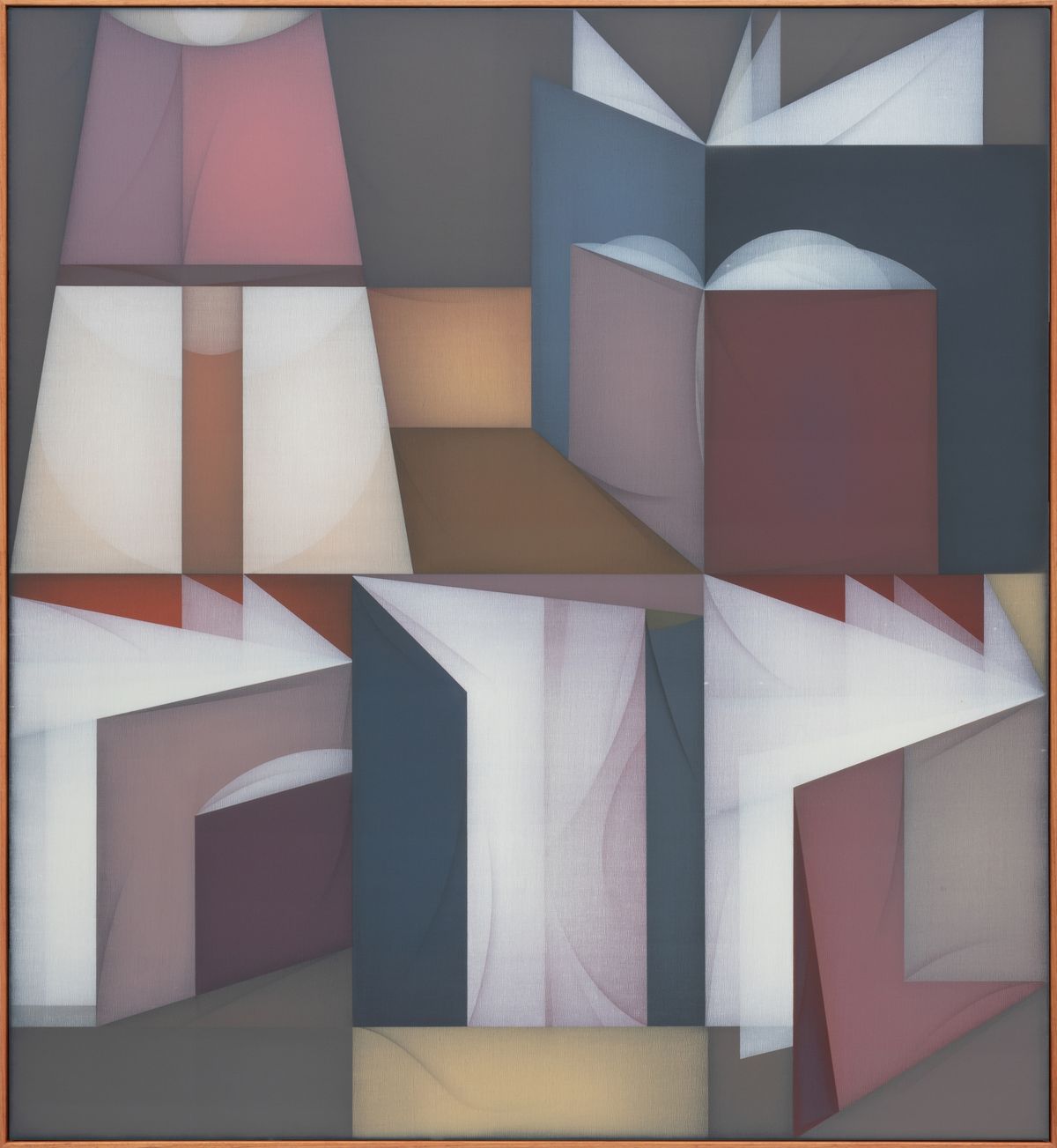
“Does anyone paint a better line than Mitch Cairns?”Wes Hill, ‘Review Mitch Cairns Art Gallery of New South Wales’, in Artforum, Vol. 64, No. 1, September 2025
There is an energy, nimble humour and love of the poetic in Mitch Cairns that is evident in his figurative paintings. While the shifting subject matter of his picture-making can be seemingly unpredictable — something he once compared to the “quick movement of finches in a tree” — what can be expected is that he draws from the close world around him: his experience of his own body, his family and friends, his home and studio, his neighbourhood, familiar urban views and architecture, and the things embedded in his psyche from places he frequents and things he sees, hears and reads. Image ideas arrive and are developed into drawings that lay the foundations for paintings. Aside from formal series, like Coloured Glass (2022 – ongoing) that have emerged in recent years, there is little repetition in his ever-developing visual repertoire.
“I have accidentally become a technical painter.”Mitch Cairns quoted in Steve Dow, ‘Senses and symbols with Mitch Cairns’, Art Guide, 9 April 2025
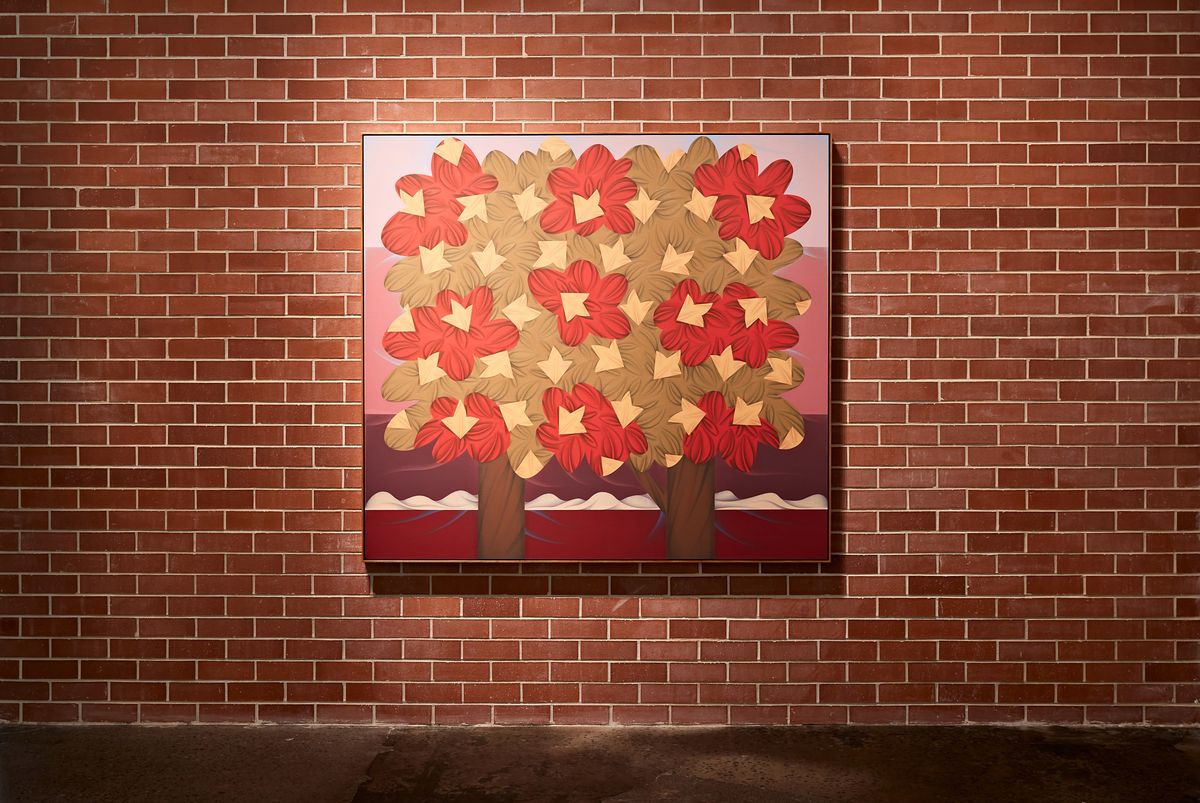
In 2021, when invited by curator Abigail Moncrieff to make a new body of work for The National 2021: New Australian Art at Carriageworks in Sydney, Mitch painted three of the largest works he had made to date and invited his father, David, a bricklayer, to build a wall on which to hang one of the paintings. Since his earliest post-art school works, Mitch has occasionally involved his father. David’s presence runs quietly through Mitch’s practice — in a fastidious approach to the trade, the invested labour of structure-building, and in the social architecture of suburban Australia that defines Mitch’s roots. The melancholic depiction of a double-trunked tree is a self-reflexive double portrait, supported by a bricks and mortar portrait of and by his father.
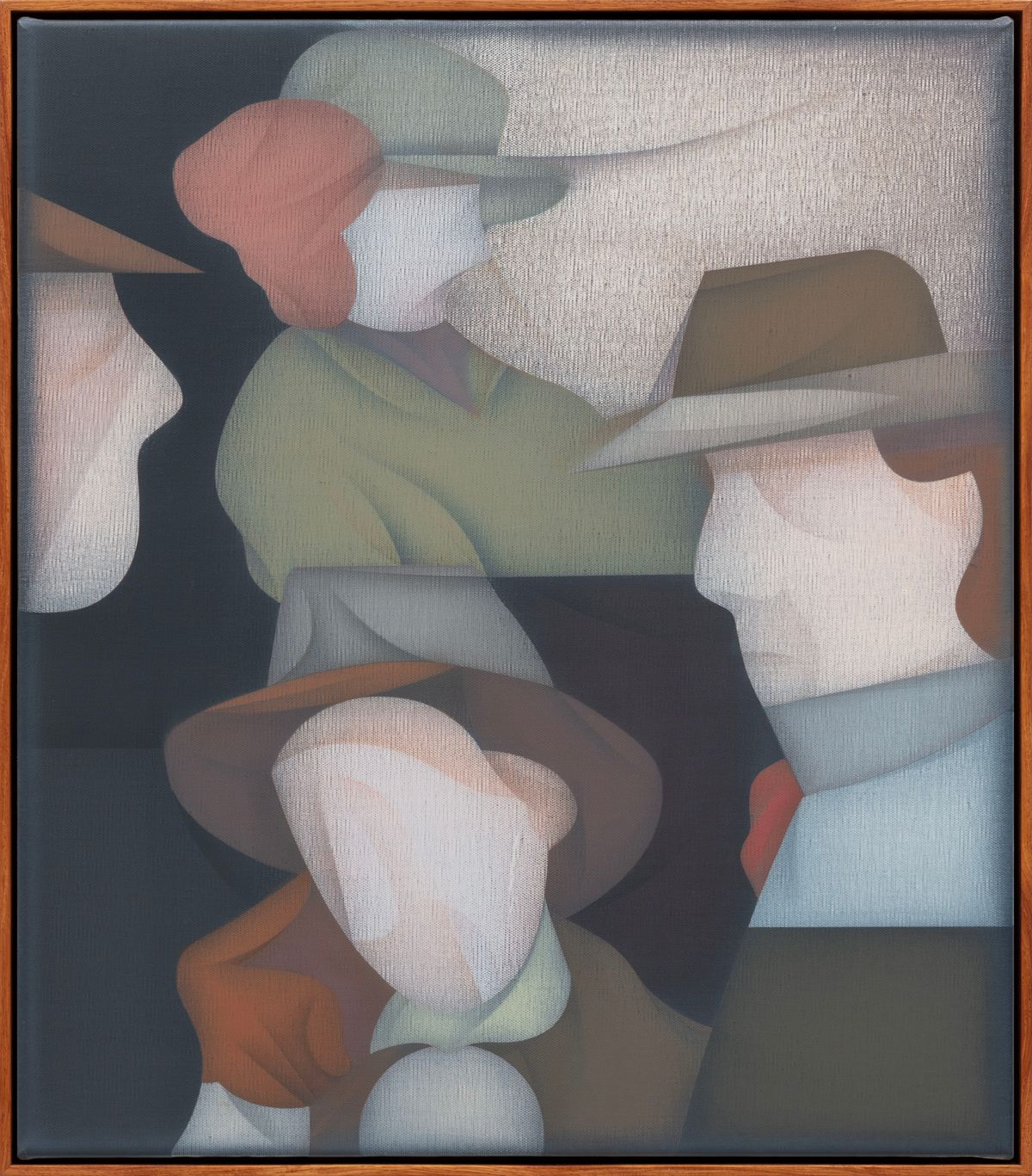
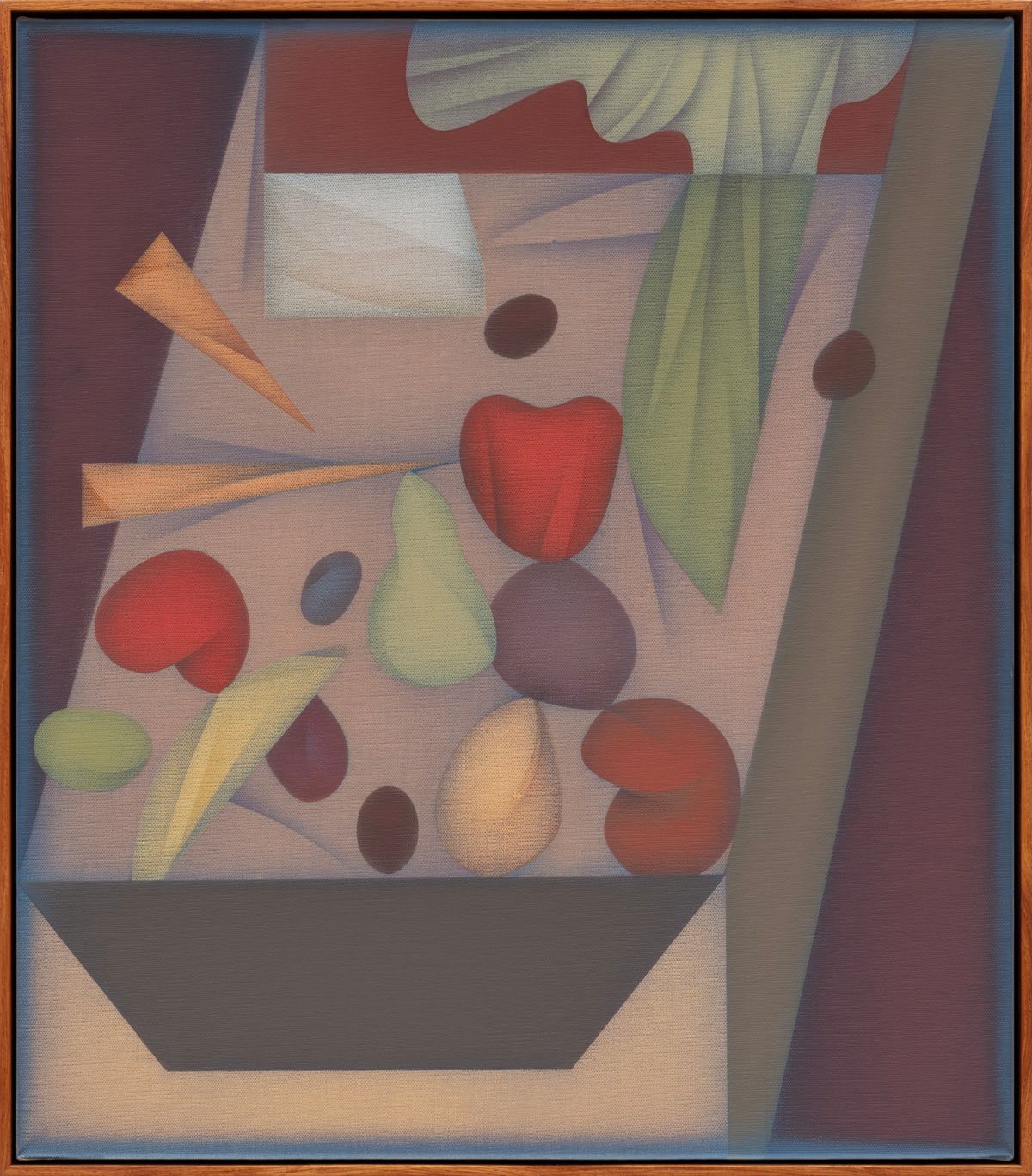
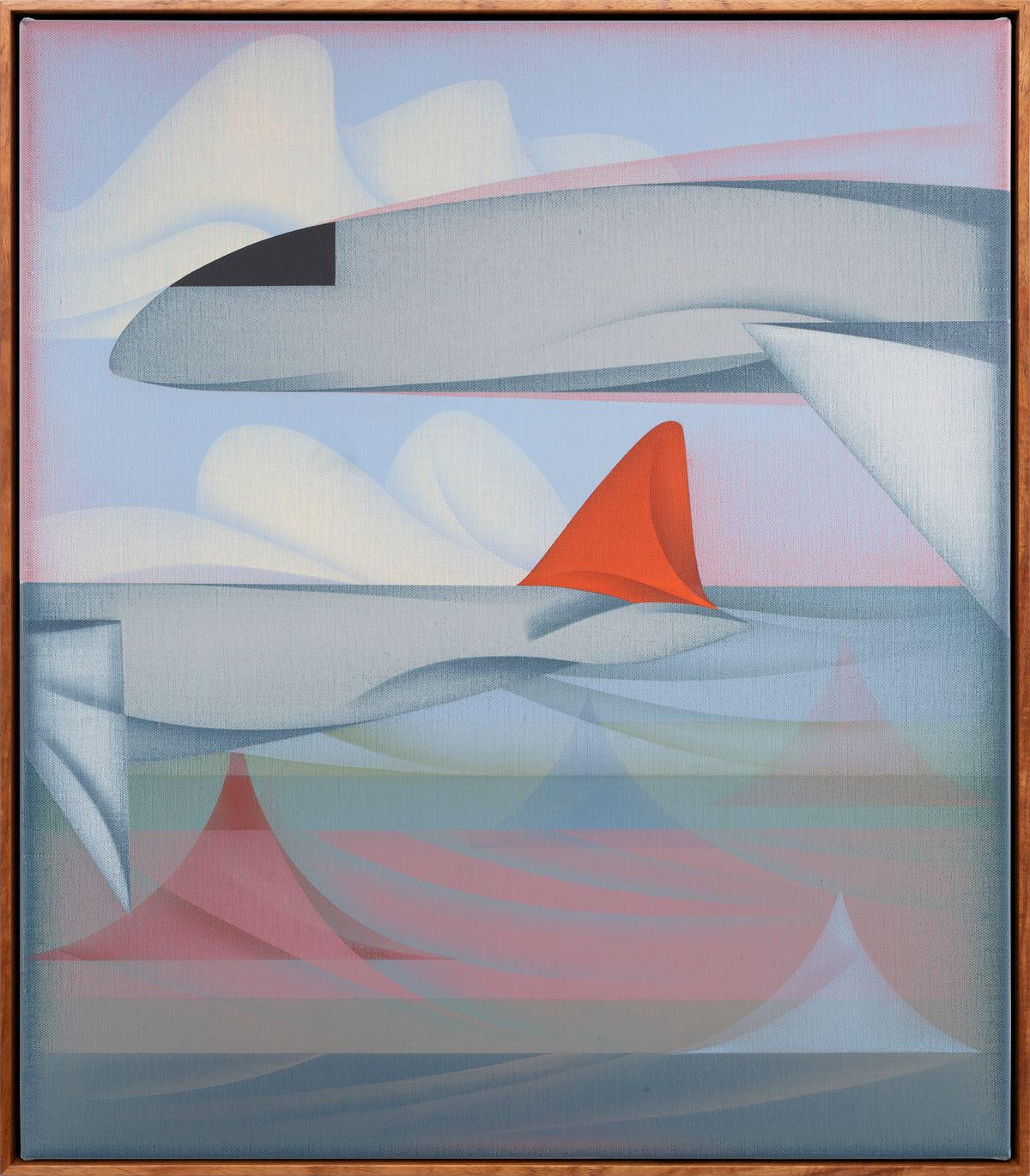

“‘For this painting, I worked from two batches of drawings made in 2017 and 2022,’ says Cairns, who considers the work a public declaration of the respect he has for Pulie as an artist.”Entry for Mitch Cairns' 2023 portrait of Elizabeth Pulie shortlisted for Archibald Prize, Art Gallery of New South Wales website
The importance of artistic community is deeply felt in Mitch’s practice. He extends this commitment through modest artist publications and occasional exhibition programmes for invited artists which he has hosted in transient exhibition spaces adjacent to his studio since the late 2000s. Quotes from, or references to, favourite writers and artists appear regularly in his work in both titles and images. Likewise, his slow-accumulating pantheon of vividly-observed portraits are odes to artist friends and heroes. Other artists appear in the periphery of his work not as portraits but as direct influences — teachers, mentors, collaborators. The economy of wit in the image making of legendary New Zealand artist, Tom Kreisler (1938-2002), has long been an influence on Mitch whose own good-natured world view runs parallel with that of his predecessor.

Mitch speaks with playful precision in an idiolectic blend of archaism and vernacular, finding humour in observation. His spoken language is akin to his visual language, which combines refined mastery with a distinctly contemporary inflection. He loves literature and language and treats written words and letters like objects to be played with. When his son was learning to speak, games of language surfaced in the paintings. A large painting, Sur Names (2018), an approximate and unresolved anagram of family names, reads like the scrambled ingredients for genetic identity. In his formal investment in language as a visual cue, concrete poetry has been an influential force, specifically the work of Scottish artist and poet Ian Hamilton Finlay, who expanded the possibilities of concrete poetry beyond the page, treating language as material to be constructed, spatialised and encountered as object.
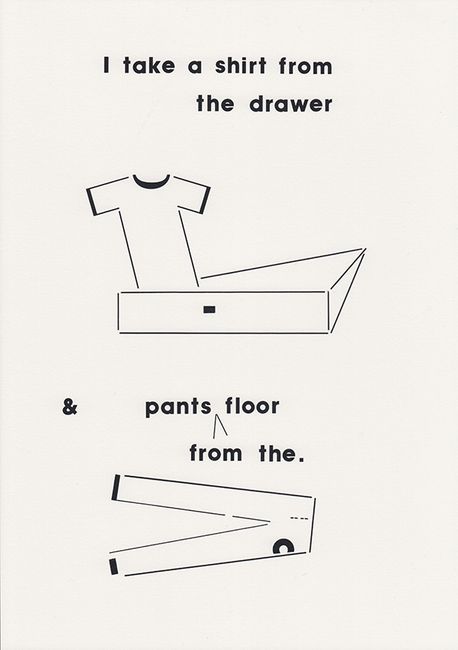


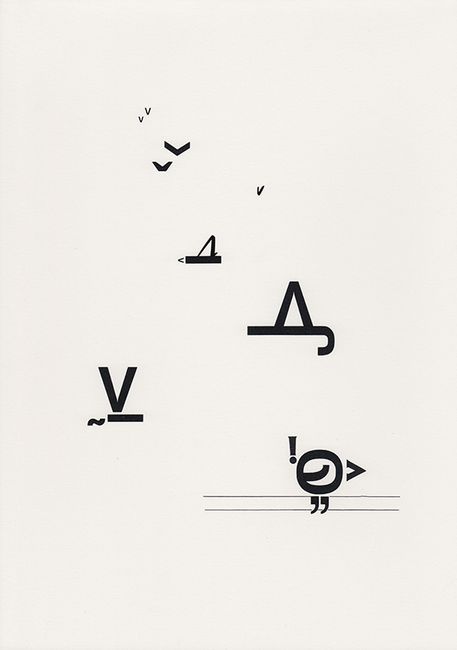
“Unlike my oil paintings, this work – made with vinyl-cut lettering on primed linen – refuses to play into the painterly standards I’m often associated with.”Mitch Cairns artist's statement for 2025 Sulman Prize
Letraset collage entered Mitch’s practice in 2015 when curator Linda Michael invited him to present a solo exhibition at Heide Museum of Modern Art in Melbourne. For this first institutional solo exhibition, he chose not to show paintings, instead producing one hundred A4 Letraset collages. All were reproduced in the accompanying artist book, The Reader’s Voice, with thirty-four framed and exhibited on the museum walls. The collages were presented alongside a bronze cast of a lino block depicting the head of a cello; a linoprint taken from the block became the book’s cover image. The bookmark — an art object in its own right — formed part of the publication’s graphic design by Gang Atelier. Bookmarks, as accessories to the act of reading, recur elsewhere in Mitch’s work like small exclamations, while the atmosphere of habitual reading appears regularly pictorially.
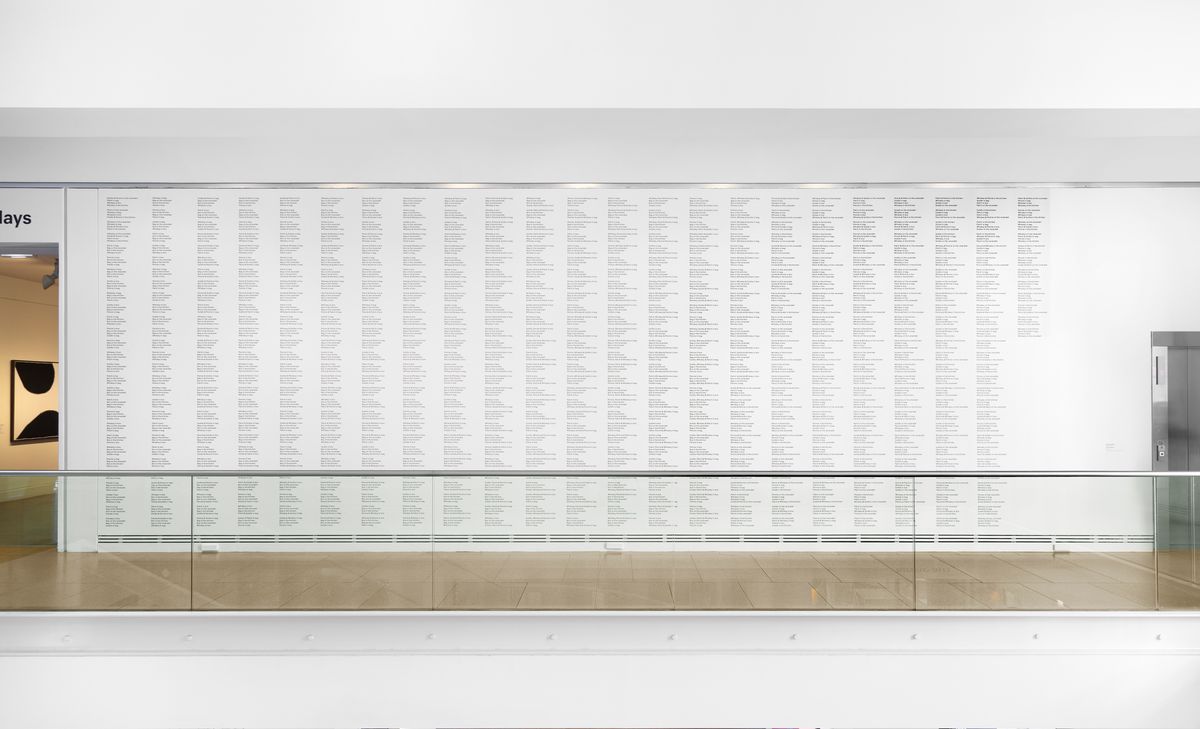
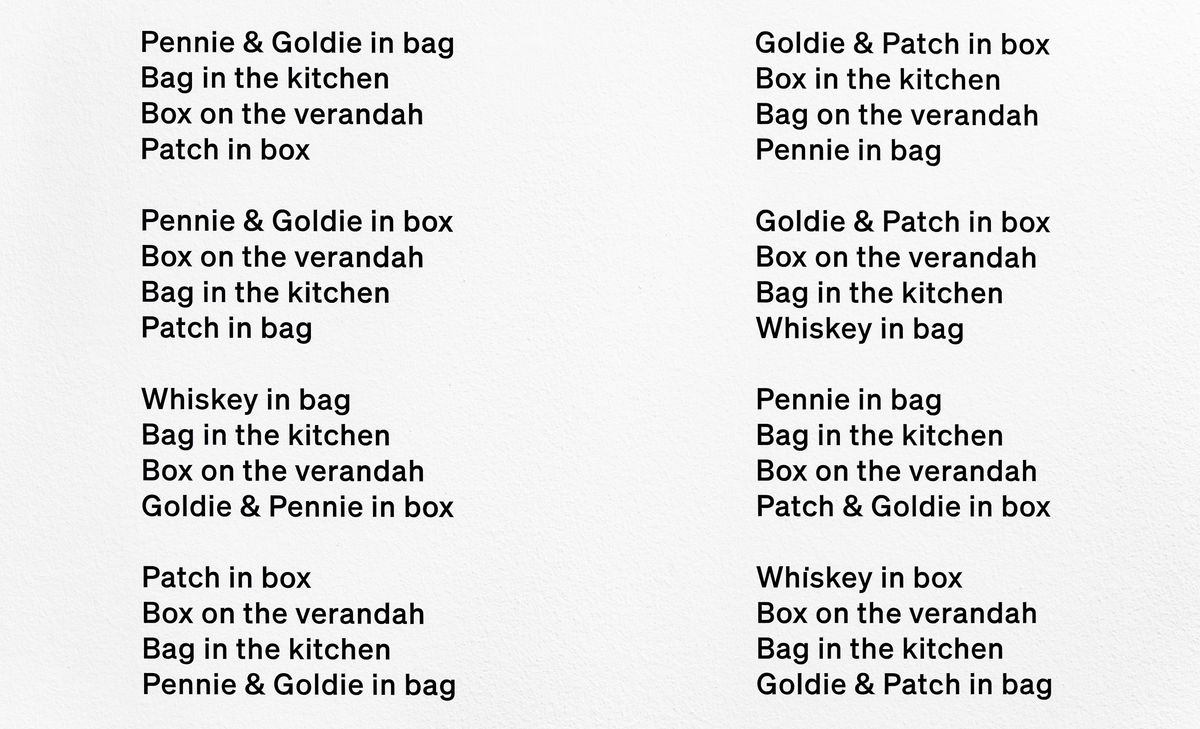

“I produced Self-Portrait as a Lemon Tree after completing a small suite of still lifes which featured lemons, I believe I was thinking about taste at the time. Working backwards, in my walled garden studio and as the painter of the still lifes, I was sure that I was the lemon tree.”Mitch Cairns, email to Jennifer Higgie, 21 Jan 2023 published in Jennifer Higgie, Thin Skin, exh. cat. Monash University Museum of Art, Melbourne, 2020, p. 58
Since 2020, Mitch has developed a repertoire of expanded self-portraiture in which other things stand in for him, beginning with ‘a lemon tree’ (Monash University Museum of Art Collection) and more recently ‘a pair of restless legs’ (Art Gallery of New South Wales Collection). In addition to these self-portraits-as-other-things, he has created a number of paintings featuring close details of body parts and items of clothing — anecdotes of mishap: a sore throat, a headache, broken spectacles, a broken shoe — or simply things that struck him as good subjects for pictures: a large hand grappling with a chess piece or a small harp — that turns out to be the Guinness logo hanging outside the pub across the street from his studio.
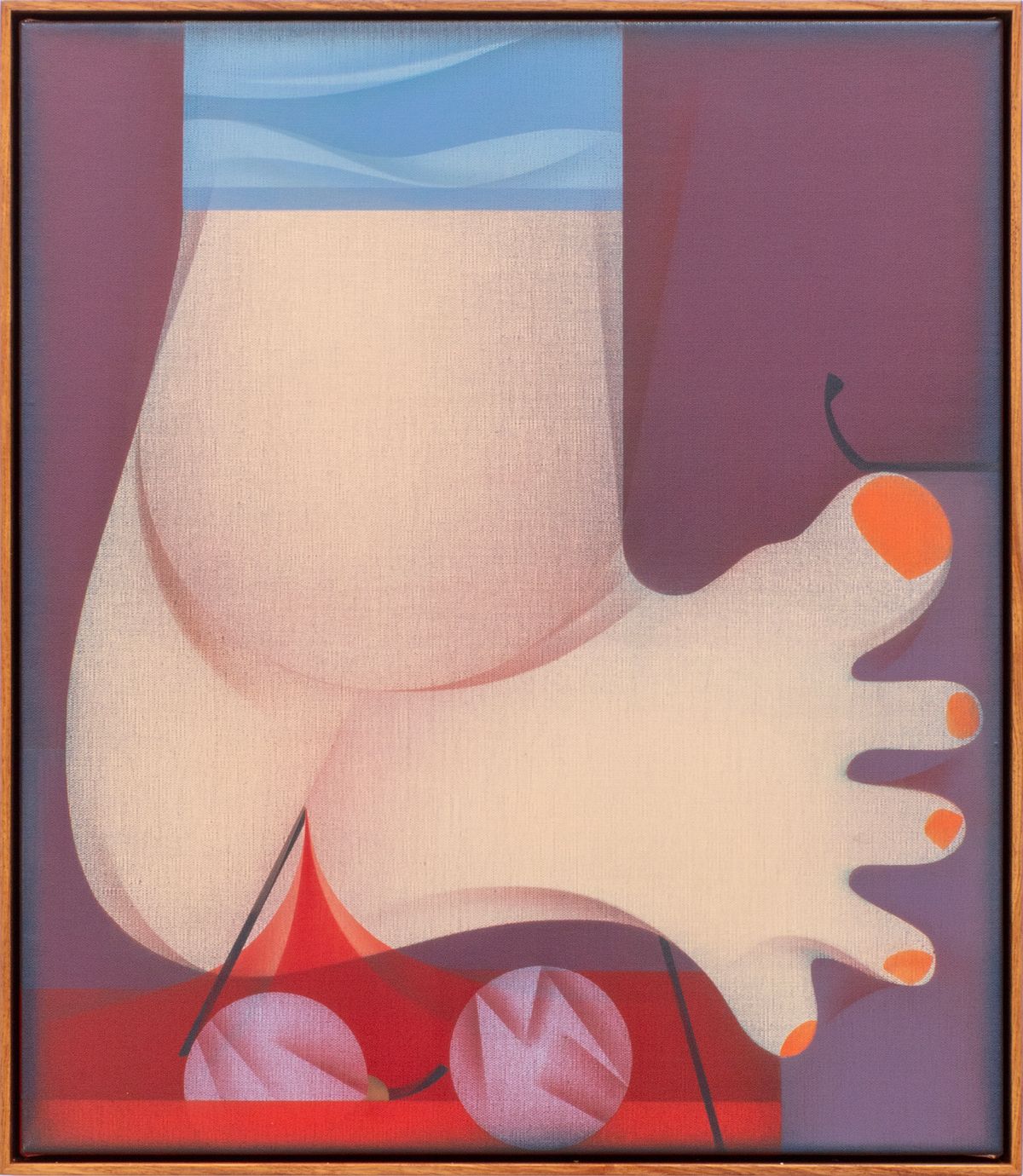
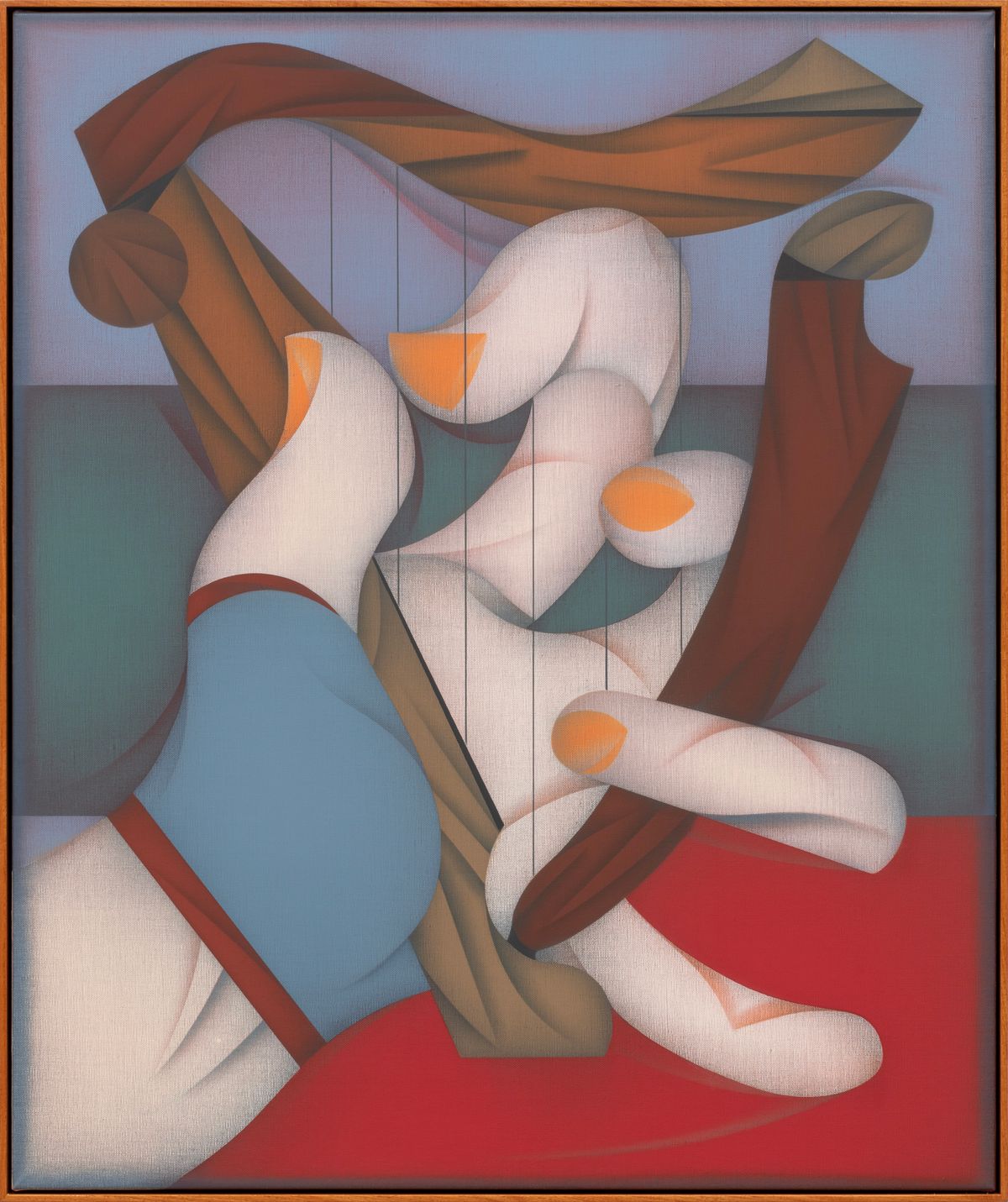
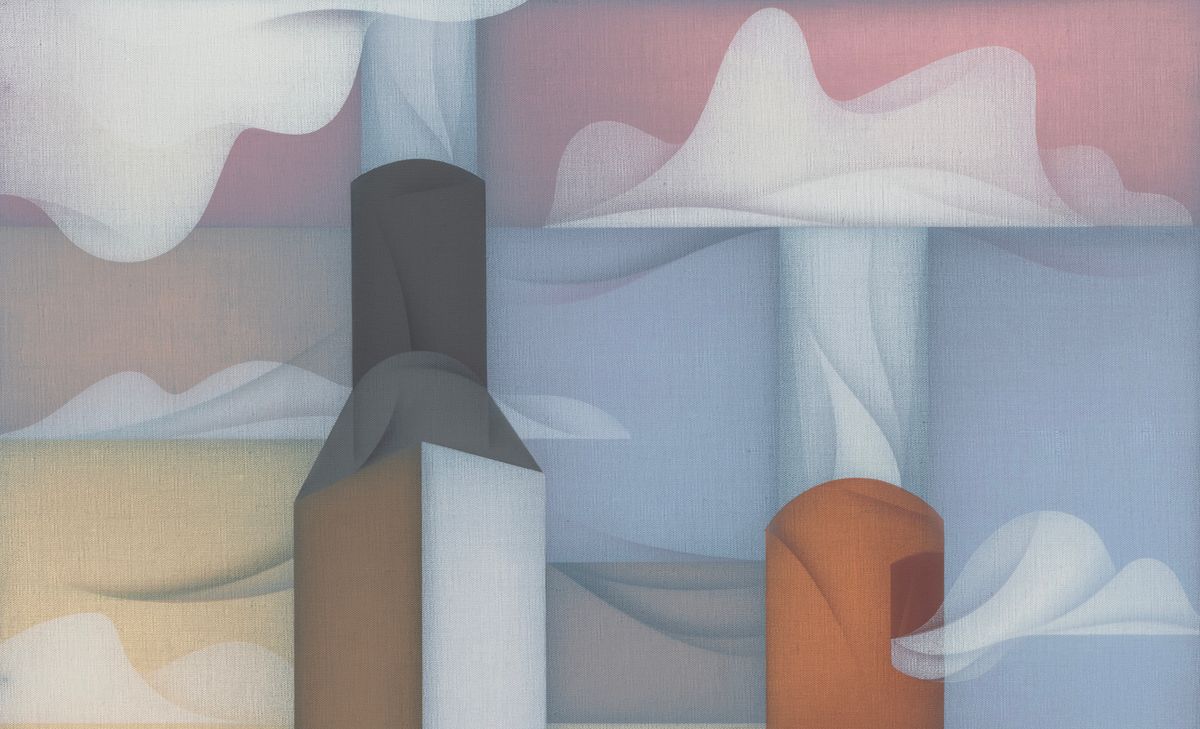
“Of late, Cairns has dubbed his works “perfume paintings”, in the sense of “something entering the air, a sensory acknowledgement”.”Steve Dow, 'Senses and symbols with Mitch Cairns', Art Guide, 9 April 2025
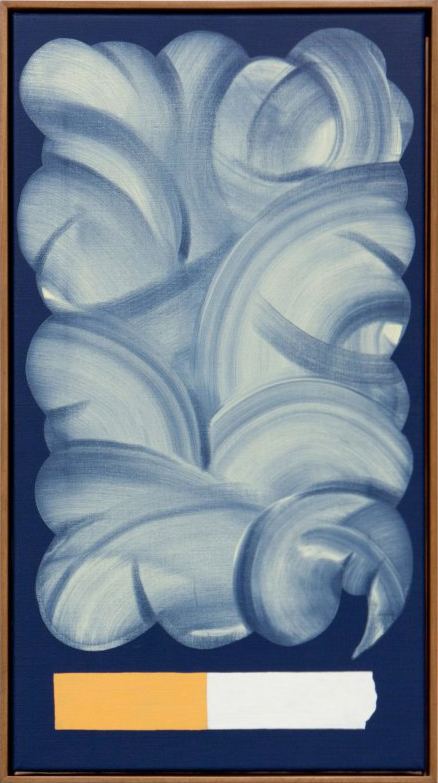
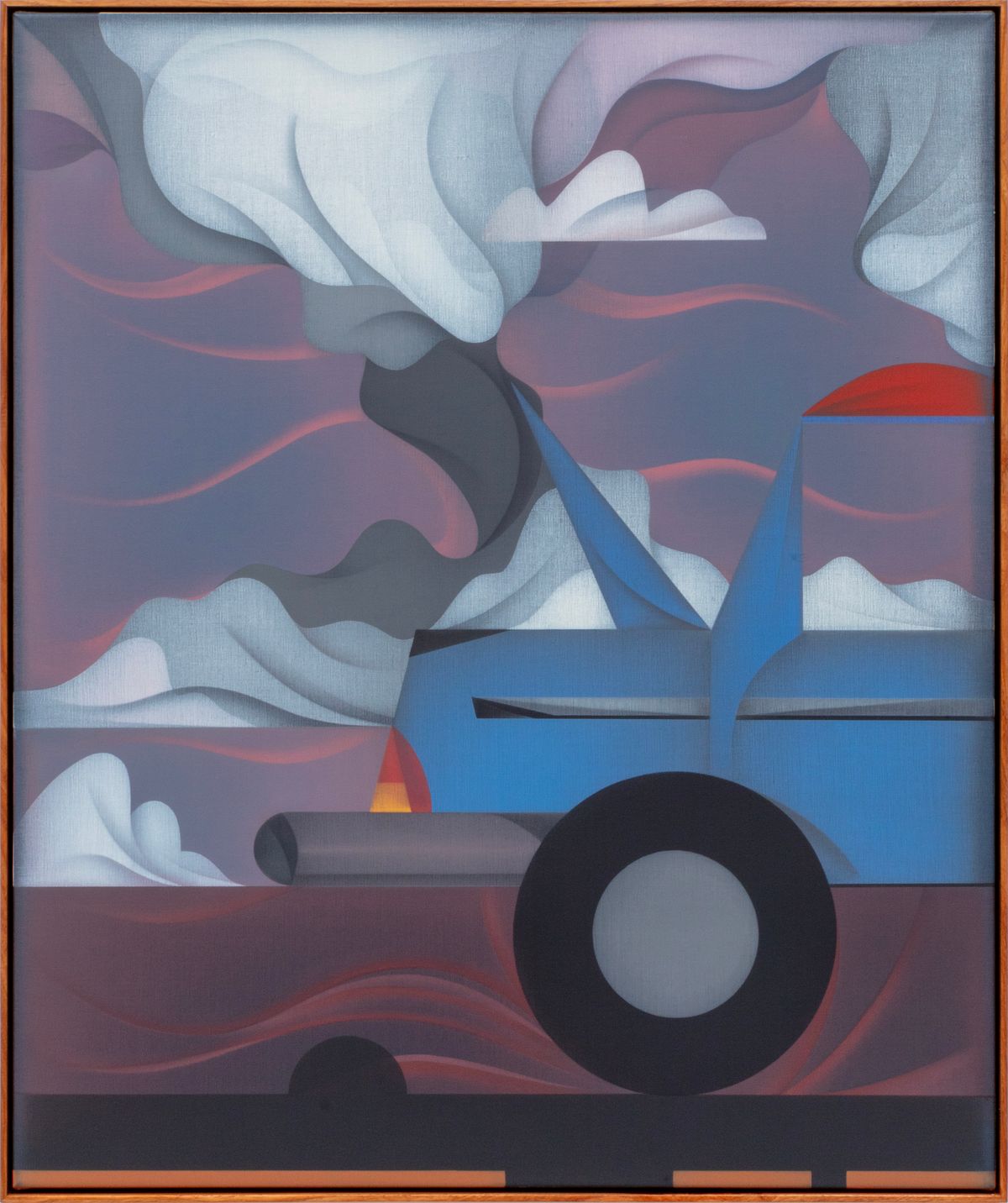
While Mitch has more recently embraced sobriety, smoking and drinking have long been companions to his thinking and studio time. Images of smoke and smoking recur throughout the work as metaphors for reverie and tools of the trade. More recently, smoke — from clouds and chimney stacks — has become an indulgence within the pictures: a dissipating substance through which the viewer’s eye and mind can drift. He calls these especially atmospheric surfaces ‘perfume paintings’, they allow him to exercise his extraordinary skill in glazing, the technique by which a complex paint surface is constructed through successive veils of pigment thinned with translucent oil medium.

Glazing is a tool through which Mitch explores formal relationships between colour and light. In 2022, Coloured Glass (for Roland) (Art Gallery of South Australia Collection), made for the Adelaide Biennial, became the first work in what has since developed into the ongoing Coloured Glass series. The project began when his son came home from school with a craft activity: a cardboard window frame containing overlapping panes of coloured cellophane, a simple lesson in colour mixing. Recognising its potential as a painting exercise, Mitch asked Roland if he might copy the object. Mitch has since produced more than twenty variations of Coloured Glass in different scales and palettes, exploring the breadth and subtlety of the colour spectrum — an investigation to which oil paint is particularly well suited.